
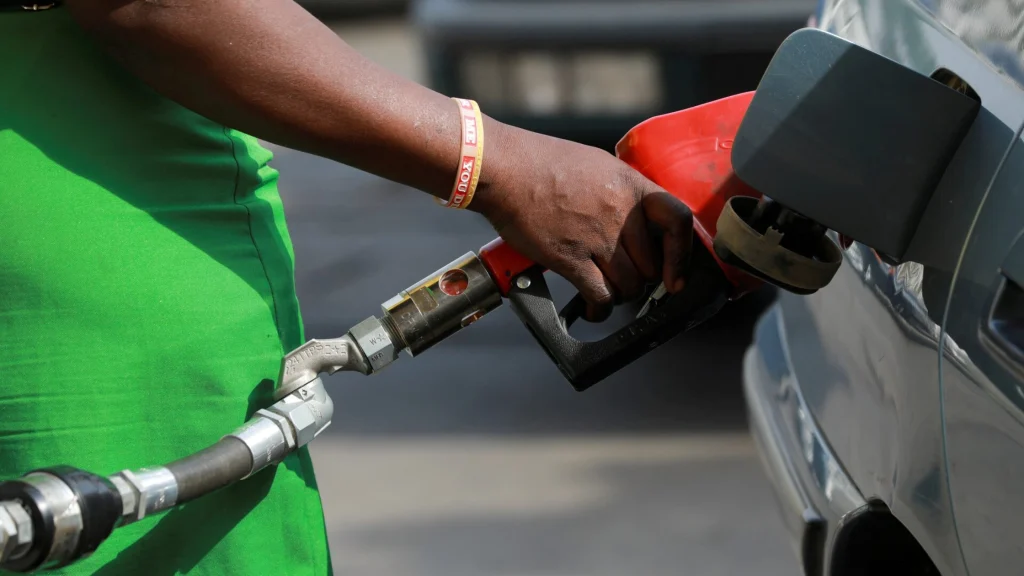
The Nigerian downstream petroleum sector is bracing for a monumental shift, following the Sunday announcement by the Chairman of Dangote Group, Aliko Dangote, that petrol to sell for N740 per litre at retail stations from Tuesday, December 16, 2025. This aggressive price reduction, stemming from a gantry price cut to N699 per litre at the Dangote Refinery, represents the most significant downward pressure on consumer fuel costs since the complete removal of the fuel subsidy in 2023.
This pivotal development promises immediate financial relief for Nigerian households and businesses, while simultaneously intensifying the commercial battle between local refiners and entrenched import interests.
The Mechanics Behind the Price Drop
The assurance of petrol to sell for N740 per litre is a direct consequence of the Dangote Refinery’s latest reduction of the ex-depot price from a recent high of N828 per litre to N699 per litre. This is not merely a marginal adjustment but a forceful intervention aimed at resetting the market benchmark.
The initial retail price of N740 per litre accounts for the refinery’s gantry price plus the essential costs of distribution, logistics, and mandatory regulatory charges (such as NMDPRA fees). Mr. Dangote specifically named MRS filling stations as the first major marketing outlets that will reflect the new pricing, starting in Lagos. This strategic partnership is expected to force immediate price compliance across all major and independent marketers.
A Clear Ultimatum to Importers
Mr. Dangote delivered a strong ultimatum to the established petroleum importers, stating that the refinery was established for the primary benefit of Nigerians, not for maximizing profit. His remarks suggest a refusal to be intimidated by the vested interests that have long controlled the country’s downstream economics.
“Anyone who chooses to continue importing despite the availability of locally refined products should be prepared to face the consequences,” he stated.
He explicitly countered complaints from importers, who claim the price cut will lead to significant losses, by noting that the imported products are often blended PMS, which is of lower quality compared to the refinery’s straight-run fuels. This provides Nigerians with a clear choice: superior quality fuel at a lower cost, or blended imports at a higher rate.
Strategic Adjustments to Empower Petroleum Marketers
To ensure the benefit of the lower price reaches every part of Nigeria and is not restricted to major marketers, the refinery made a key logistical adjustment. The minimum purchase requirement for marketers was drastically reduced from two million litres to 500,000 litres.
This move is explicitly designed to enable greater participation from members of the Independent Petroleum Marketers Association of Nigeria (IPMAN), allowing them to compete effectively against larger oil companies. The ability of independent marketers to lift product directly at N699 per litre will be crucial to ensure the petrol to sell for N740 per litre price point is reflected across a wider geographical area.
The Sabotage and Importation Allegations
Mr. Dangote did not mince words when discussing the challenges faced by the refinery. He accused the Nigerian Midstream and Downstream Petroleum Regulatory Authority (NMDPRA) of misrepresenting the refinery’s capacity and allegedly encouraging imports to keep domestic prices artificially inflated.
He claimed that deliberate attempts were being made to compel the refinery to export its products, only for them to be re-imported later at higher prices, a process that profits importers at the expense of the Nigerian consumer. The Chairman disclosed that import licences covering approximately 7.5 billion litres of PMS had been issued for the first quarter of 2026 alone, despite the facility’s capacity to meet local demand.
This alleged sabotage highlights the political and financial obstacles faced by local refining projects, and the continued power of the importation lobby even in a deregulated market.
CNG Deployment and the Future of Transportation
Beyond petrol, the refinery is pushing a broader strategy for energy affordability through Compressed Natural Gas (CNG). Mr. Dangote confirmed that despite facing frustration, the refinery would deploy its own fleet of CNG trucks in the coming days. The procurement of additional CNG units, potentially exceeding the initial 4,000, is part of a sustained effort to provide cost-effective and environmentally cleaner fuel alternatives for the transportation sector.
The availability of cheap, high-quality petrol to sell for N740 per litre alongside a growing CNG option will fundamentally reshape the economics of road transportation and logistics across the country.
A Legacy Project: Listing the Refinery for Nigerians
Mr. Dangote reiterated that the $20 billion refinery project is driven by legacy and national benefit, rather than purely financial gain. He highlighted a bold plan to list the refinery on the Nigerian Exchange (NGX), fulfilling a commitment to allow every Nigerian to own a stake in the critical national asset.
Discussions are currently ongoing with the Securities and Exchange Commission (SEC) to enable local investors to purchase shares in Naira while receiving dividends in dollars. This unique structure is designed to maximize public participation and allow ordinary citizens to benefit from the facility’s dollar-denominated revenue stream. The plan is to retain 45 per cent ownership and allow the market to acquire 55 per cent, ensuring wide public ownership.
Implications for Businesses and Logistics
For businesses operating in Nigeria, the assurance of petrol to sell for N740 per litre is a massive boost to the bottom line. Transportation and operational costs, which have soared since the 2023 subsidy removal (when prices initially spiked from N195 to over N617 per litre, and then much higher), are now set for a significant reversal. Companies focused on logistics, manufacturing, and supply chain management can now forecast lower input costs.
However, this turbulent environment also creates new pressures:
Compliance and Operational Strategy in the New Pricing Landscape
The instability and allegations of sabotage demonstrate the high-stakes nature of the Nigerian energy market. Companies operating within the downstream sector must ensure their operational strategies are robust, compliant, and flexible enough to handle sharp market swings.
- Workforce Localization: As domestic production ramps up, the demand for specialized technical personnel in midstream and downstream logistics will grow exponentially. Ensuring that these teams are compliantly managed and adhere to local content regulations remains crucial.
- Supply Chain Compliance: Companies lifting product at N699 per litre must ensure their entire distribution chain is fully transparent to avoid being penalized for profiteering or hoarding.
Kharis Petroleum Resources & Investments is strategically positioned as the essential partner for compliant workforce and operational solutions for the oil & gas industry across Nigeria. Our expertise in local regulation and rapid staffing deployment enables filling stations, petroleum marketing companies, and logistics firms to swiftly capitalize on this new pricing reality, ensuring they benefit from the lower cost of supply while completely mitigating the risk of regulatory scrutiny and penalties.
The Challenge of Crude Supply
Despite the successful operation, Mr. Dangote revealed a critical long-term challenge: insufficient domestic crude supply. The refinery currently imports an average of 100 million barrels of crude oil annually from the United States, a figure expected to double to 200 million barrels following expansion. This reliance on imports, sourced also from countries like Ghana, underscores the need for Nigeria to stabilize its upstream sector and curb crude oil theft to feed its local refineries. He called on the government to adopt tax assessment models based on actual transaction values to prevent under-declaration and massive revenue losses in the crude oil segment.
The ability to sustain the N740 price point and meet Nigeria’s domestic demand hinges not only on the refinery’s capacity but on the government’s commitment to prioritizing local refineries for crude allocation over exports.
Final Outlook
The commitment to ensure Petrol sells for N740 per litre is a decisive victory for Nigerian consumers and marks a turning point in the nation’s energy independence journey. It forces the issue of market dominance and regulatory integrity. The upcoming deployment of CNG and the planned NGX listing further underscore the project’s long-term goal of fostering national economic resilience. The battle for the Nigerian downstream is officially underway, and consumers are the immediate beneficiaries.