A Breakdown of Star Oil’s Tax Contributions
The total GH¢2.6 billion payment encompasses various forms of taxes and statutory levies. Among the notable components are:
- Corporate Income Tax: Around GH¢41 million paid on profits.
- Withholding Tax and PAYE: GH¢51.9 million advanced to the state.
- Customs Duties on Fuel Imports: The largest single component at about GH¢1.7 billion, reflecting Star Oil’s extensive importation and distribution activities nationwide.
These payments reflect not only compliance with tax laws but also a deep engagement with Ghana’s regulatory framework governing energy and petroleum products.
Driving Revenue for Government Programs
Star Oil’s multibillion cedi contribution arrives at a time when domestic revenue mobilization is a policy priority for Ghana’s government. According to the Ministry of Finance’s 2025 budget data, tax revenues from companies (including the oil sector) form a significant portion of the total revenue pool that funds public services, infrastructure, and development projects.
By comparison, revenues from company taxes on oil were projected at billions of cedis in national forecasts making Star Oil’s payment a meaningful share of broader government expectations.
Market Leadership and Operational Scale
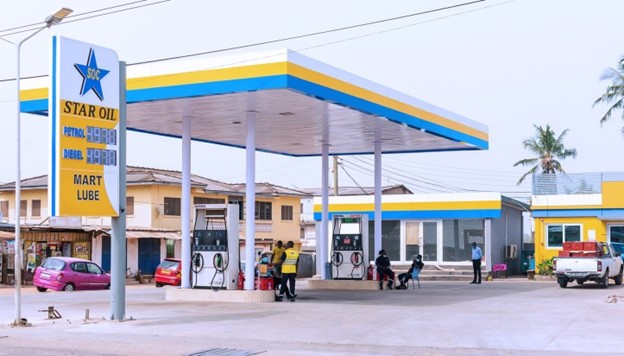
2025 was also a year of growth and market consolidation for Star Oil. The company reported the sale of approximately 819 million liters of petroleum products and operated 254 filling stations nationwide. Its market share stood at roughly 14 per cent by year’s end, underscoring its position as a major supplier of diesel, petrol, and LPG in Ghana.
This strong operational performance not only drives the company’s tax contributions but also supports thousands of direct and indirect jobs across the value chain. As of the end of 2025, Star Oil employed more than 2,700 Ghanaians, expanding employment in the energy distribution sector.
Why This Matters for Ghana’s Economy?
Tax revenue from large private sector players like Star Oil is vital for several reasons:
- Funding Public Services: Taxes support essential government functions — from education and healthcare to infrastructure and social protection
- Reducing Debt Dependence: Domestic tax revenue helps lessen reliance on external borrowing or emergency bailouts, contributing to fiscal stability.
- Encouraging Business Growth: When profitable companies contribute significant taxes while maintaining operations and jobs, it signals a healthy business environment.
This contribution also comes amid broader national efforts to strengthen revenue mobilization. For example, Ghana’s revenue intake grew by more than 22 per cent in 2025, supported by improved compliance and economic activity.
The Broader Petroleum Sector Context
Star Oil’s achievement is part of a wider picture in the petroleum market. The National Petroleum Authority (NPA) has recorded shifts in market leadership, with Star Oil overtaking long standing competitors like GOIL in some performance metrics.
At the same time, fuel levy adjustments and other regulatory changes have reshaped pricing dynamics on the ground, influencing both consumption and revenue streams.
What This Means for Consumers
Interestingly, while the company’s tax contributions are substantial, Star Oil like other Oil Marketing Companies (OMCs) has also been part of recent moves to ease fuel prices at the pump. In early 2026, Star Oil announced reductions in petrol prices at selected stations, making fuel more affordable for motorists.
This shows that even as companies fulfil their fiscal obligations, operational efficiencies and market competition can yield consumer benefits particularly in a period of easing crude cost pressures and gradual exchange rate stability.
Conclusion: A Positive Economic Signal
Star Oil’s GH¢2.6 billion payment in taxes and levies for 2025 is more than just a financial figure. It is a testament to the company’s commercial strength and a positive signal for Ghana’s economy. This level of domestic revenue generation supports public finances and demonstrates how local enterprises can contribute to national growth and development.
As policymakers continue to priorities revenue mobilization and economic diversification, contributions from key sectors like petroleum distribution will remain central to Ghana’s fiscal health and sustainable development.