
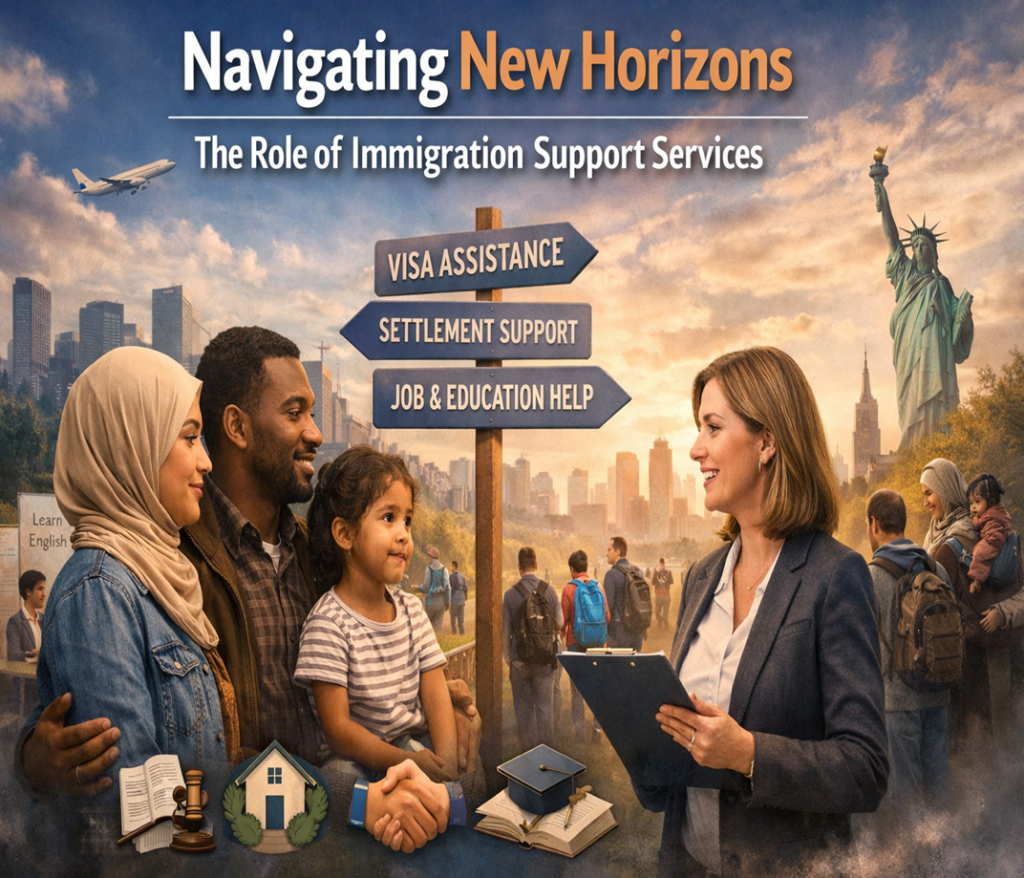
Navigating New Horizons: Immigration Support Services
Immigration is a transformative journey filled with promise, opportunity, and the potential for a better life. For countless individuals and families, relocating to a new country opens doors to education, career advancement, family reunification, and safety from conflict or economic hardship. However, these aspirations are often accompanied by significant challenges. Complex legal requirements, unfamiliar cultural norms, language barriers, and emotional stress can make the immigration process daunting. This is where Immigration Support Services become indispensable, offering guidance, resources, and reassurance that help newcomers successfully navigate their transition and thrive in a new environment.
Immigration Support Services are designed to assist individuals and families through every stage of migration. From the earliest stages of visa applications to long-term settlement and social integration, these services provide professional expertise, practical tools, and emotional support. Without this guidance, immigrants can encounter delays, application errors, or social isolation, which may impede their ability to fully benefit from the opportunities available in their host country. By offering comprehensive support, these services ensure that immigrants understand their rights and responsibilities, can access essential resources, and focus on establishing stable and fulfilling lives.
One of the most critical areas of support is legal and visa assistance. Immigration laws are often complex, vary by country, and can change frequently, making it challenging for applicants to navigate the system on their own. Immigration Support Services provide expertise in identifying the correct visa pathways, whether for work, family reunification, education, or humanitarian purposes. They also help with document preparation, ensuring that applications are accurate, complete, and submitted on time. For legal assistance in the United States, organizations like the U.S. Citizenship and Immigration Services (USCIS) Community Help Finder offer directories of local legal aid and educational programs to assist with naturalization and rights information.
In addition to government resources, nonprofit groups such as the Immigrant Legal Resource Center (ILRC) provide extensive legal materials, toolkits, and training on asylum, naturalization, enforcement, and other immigration law issues.
Beyond legal guidance, settlement and integration services play a vital role in helping newcomers adapt to their new surroundings. Securing safe and affordable housing is often one of the first challenges immigrants face. Settlement programs provide essential guidance on housing options, tenant rights, and local regulations, helping families avoid unsafe or exploitative conditions. Language training is another critical component, enabling newcomers to communicate effectively, participate in social and professional activities, and build confidence. Cultural orientation programs further support integration by providing insights into local customs, workplace norms, and community resources, fostering smoother social adjustment and a sense of belonging.
Employment and education support is also crucial. Many immigrants arrive with skills, qualifications, and professional experience but may struggle to find suitable employment due to unrecognized credentials or unfamiliar hiring practices. Immigration Support Services assist with job placement, resume building, interview preparation, and career guidance tailored to local market demands. They also help immigrants navigate educational opportunities, from enrolling in schools and universities to accessing vocational training programs or scholarships. These services empower newcomers to contribute their talents, secure financial independence, and achieve long-term career success.
For refugees and asylum seekers, specialized Immigration Support Services are often life-saving. Individuals fleeing persecution, conflict, or natural disasters may arrive with limited resources and deep emotional trauma. Support programs assist with asylum applications, ensuring claims are properly documented and presented. The UN Refugee Agency (UNHCR) maintains lists of international resources that can help refugees and asylum seekers find local aid and legal support regardless of their host country. Trauma counseling and mental health services help individuals cope with psychological stress, while emergency aid programs supply food, shelter, healthcare, and other essentials. Family reunification services help separated loved ones reconnect and rebuild crucial social bonds.
Community and advocacy organizations further enhance the immigration support ecosystem. These groups promote fair immigration policies, raise public awareness, and organize cultural and educational events. European organizations like Pro Asyl, which offers legal consultancy and protection for refugees, and Equal Rights Beyond Borders, providing free legal support for asylum seekers and family reunification, exemplify this type of broader advocacy and legal aid network.
The benefits of Immigration Support Services extend well beyond individual users. Well-supported immigrants are more likely to secure employment, start businesses, contribute to the economy, and enrich cultural and social life. Research consistently shows that newcomers who receive comprehensive support achieve economic self-sufficiency more rapidly, reducing dependence on public resources and fostering social cohesion.
Choosing the right support service is essential for a successful immigration journey. Immigrants should seek accredited organizations, obtain recommendations, understand service costs, and ensure language accessibility. While many nonprofits offer free or low-cost services, especially for refugees, private providers may charge fees, so transparency is key. Despite challenges such as limited funding, high demand, and bureaucratic hurdles, collaboration among governments, nonprofits, and technological platforms continues to expand access and improve the efficiency of support services.
In conclusion, Immigration Support Services serve as a critical bridge to new beginnings. By addressing legal, social, economic, and emotional challenges, these services empower immigrants to overcome barriers, integrate successfully, and contribute meaningfully to their host communities. They help build stronger, more inclusive societies where diversity is valued and everyone has the opportunity to thrive.