Digital transformation in oil and gas is changing how energy companies explore resources, manage equipment, monitor operations, improve safety, and make business decisions. By combining digital technologies with better processes and workforce skills, companies can turn operational data into useful insights and improve how they manage complex energy activities.
But what does digital transformation actually mean? Which technologies are involved, how do they work, and what challenges should companies understand before adopting them?
This guide explains the meaning of digital transformation in the oil and gas industry, its major technologies, practical applications, benefits, risks, and the steps organizations can take to begin their digital journey.
What Is Digital Transformation in Oil and Gas?
Digital transformation in oil and gas is the use of digital technologies, data, and connected systems to improve the way energy companies operate and make decisions.
It involves more than purchasing new software or replacing paper records with electronic documents. It may require organizations to redesign workflows, connect previously separate systems, improve data management, train employees, and introduce new ways of monitoring and controlling operations.
For example, an oil and gas company may traditionally inspect equipment according to a fixed maintenance schedule. With connected sensors and data analytics, the company can monitor equipment conditions and identify warning signs that suggest maintenance may be required.
Similarly, a company managing offshore operations may use digital scheduling and tracking systems to coordinate personnel, vessels, equipment, and supplies.
The main objective is to use information more effectively so that operations become safer, more reliable, efficient, and responsive.
The International Energy Agency’s report on Digitalization and Energy provides further background on how digital technologies can affect energy operations and the wider energy system.
Why Is Digital Transformation Important in the Oil and Gas Industry?
Oil and gas operations involve expensive equipment, complex supply chains, strict safety requirements, and changing operating conditions. Managing these activities effectively requires accurate information and timely decisions.
Digital technologies can help organizations address several common operational challenges.
1. Managing complex equipment and assets
Oil rigs, processing facilities, pipelines, pumps, compressors, and offshore platforms require regular monitoring and maintenance. Digital systems can help teams collect equipment data, identify unusual conditions, and plan maintenance more effectively.
2. Improving workplace safety
Oil and gas employees may work in hazardous environments, including offshore installations, confined spaces, and areas containing flammable gases. Remote monitoring, digital inspections, and automated alerts can help teams identify certain hazards and reduce unnecessary exposure.
Digital systems do not replace safety procedures or competent personnel. They support the people responsible for identifying and managing risks.
3. Controlling operating costs
Equipment failures, unplanned shutdowns, inefficient logistics, and delays can increase operating expenses. Better data and planning can help organizations identify waste, prioritize maintenance, and use resources more effectively.
4. Making faster, better-informed decisions
When information is spread across spreadsheets, paper records, and separate software systems, managers may struggle to see the complete operational picture.
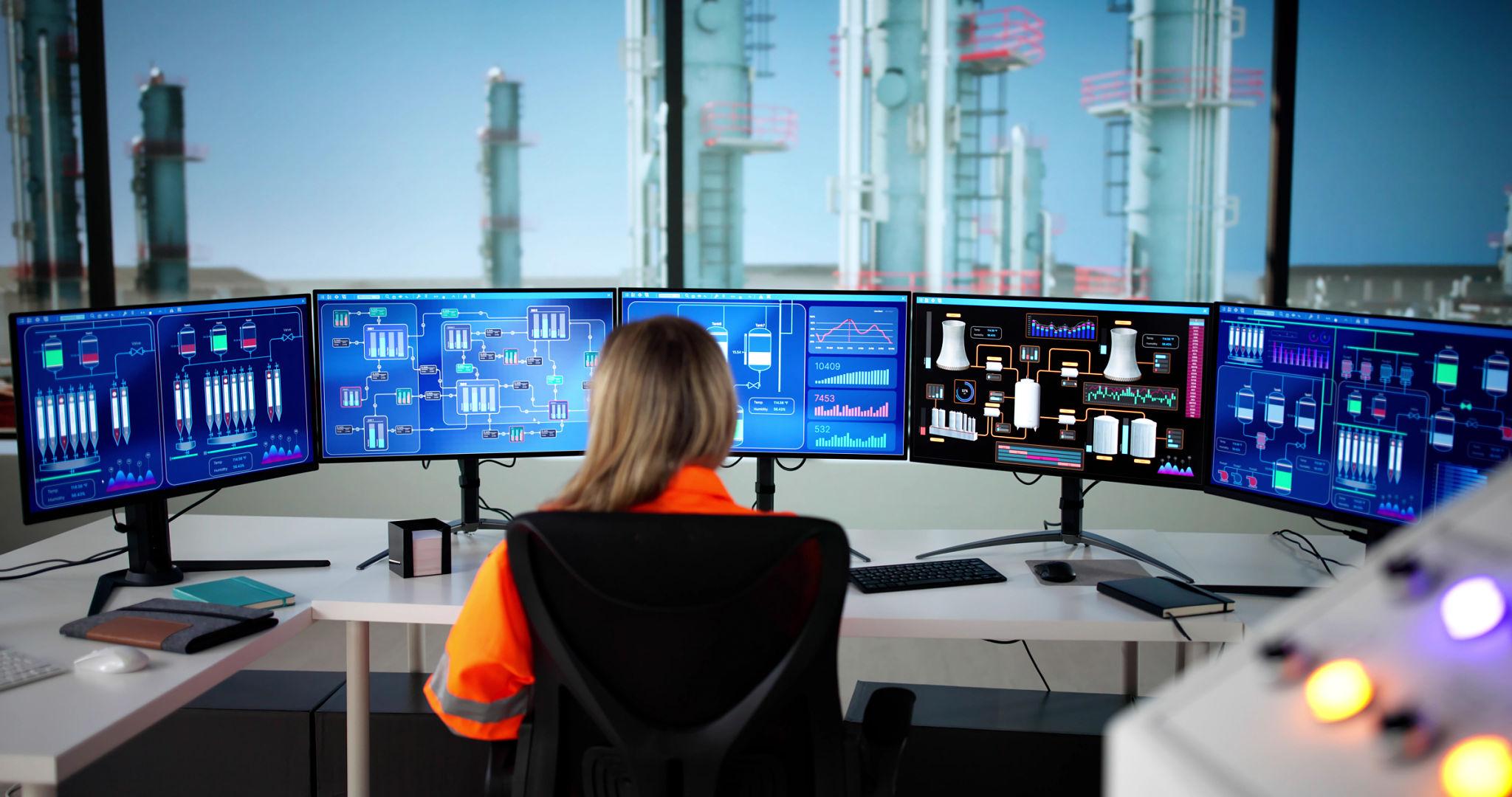
Connected data platforms and dashboards can bring relevant information together, helping decision-makers understand what is happening and where action may be needed.
5. Responding to environmental and reporting requirements
Digital monitoring can support the measurement of energy use, emissions, leaks, and other environmental indicators. Accurate records can help organizations prepare reports and identify opportunities to improve environmental performance.
The results depend on the quality of the data, the technology selected, and how consistently the systems are used.
Key Technologies Used in Digital Transformation in Oil and Gas
Several technologies contribute to digital transformation in the energy industry. They often work together rather than operating independently.
Internet of Things (IoT) and smart sensors
The Internet of Things refers to connected devices that collect and exchange data. In oil and gas operations, sensors can measure pressure, temperature, vibration, flow rates, and other equipment conditions.
For example, a sensor attached to a pump may detect unusual vibration. The monitoring system can alert maintenance personnel, who can investigate before the problem develops into a more serious failure.
How it helps: IoT technology supports real-time monitoring, equipment visibility, and earlier identification of potential problems.
Artificial intelligence and machine learning
Artificial intelligence (AI) and machine learning help computer systems analyze data, identify patterns, and support predictions or recommendations.
In oil and gas, these technologies can be used to analyze equipment performance, support exploration and reservoir analysis, identify unusual operating conditions, and improve planning.
For instance, an analytics system may compare current equipment readings with historical patterns and flag conditions associated with previous failures.
AI outputs should be reviewed in the context of operational knowledge, data quality, and safety requirements. They should not automatically be treated as correct.
How it helps: AI and machine learning can help teams analyze large datasets and identify patterns that may be difficult to detect manually.
Cloud computing and data platforms
Cloud computing allows organizations to access computing resources, applications, and storage through network-based services. Data platforms help bring information from different systems into a more accessible environment.
An oil and gas company with teams working across offshore installations, field offices, and headquarters may use shared platforms to improve access to approved operational information.
However, cloud adoption requires careful consideration of connectivity, data ownership, access permissions, regulatory requirements, and cybersecurity.
How it helps: Cloud platforms can improve information sharing, collaboration, and the ability to scale digital systems.
Digital twins
A digital twin is a digital representation of a physical asset, process, or system. Depending on its design, it may use engineering information, operating data, and simulations to represent how the real-world asset behaves.
An operator could use a digital twin of a processing facility to examine operating scenarios, understand equipment interactions, or support maintenance planning.
A digital twin is not automatically a perfect real-time copy of an asset. Its usefulness depends on the quality of its underlying model and data.
How it helps: Digital twins can support simulation, planning, training, and analysis without requiring every scenario to be tested on the physical asset.
Robotics, drones, and automation
Robots and drones can help inspect difficult-to-reach equipment, pipelines, tanks, and offshore structures. Automated systems can also carry out selected repetitive tasks or maintain process conditions within defined limits.
For example, a drone may capture images of an elevated structure so that inspection personnel can examine its condition. This can reduce the need for certain manual inspections, although follow-up work may still be required.
How it helps: Robotics and automation can improve inspection efficiency, consistency, and access to hazardous or difficult locations.
Remote monitoring and digital collaboration
Remote monitoring allows authorized personnel to review equipment conditions and operating information from another location. Digital collaboration tools allow field teams, engineers, maintenance specialists, and managers to share information.
For offshore operations, this can help onshore specialists support field personnel without always needing to travel to the installation.
How it helps: Remote systems can improve coordination, access to expertise, and the speed of communication between operational teams.
What Are the Benefits of Digital Transformation in Oil and Gas?
The benefits depend on the needs of each organization and how successfully the technology is implemented.
Improved maintenance and equipment reliability
Predictive maintenance uses equipment data and analytical techniques to identify signs of possible failure. It can help maintenance teams prioritize inspections and plan interventions before certain problems cause unplanned downtime.
Predictive maintenance does not eliminate equipment failure, but it can complement preventive maintenance and established engineering procedures.
Better operational efficiency
Digital scheduling, monitoring, and reporting can reduce manual administrative work and make it easier to identify delays. Teams can spend less time searching for information and more time responding to operational needs.
Improved safety management
Digital permit-to-work systems, electronic inspection records, incident reporting tools, and remote monitoring can improve visibility of safety activities. Their effectiveness still depends on proper procedures, employee participation, and management oversight.
More informed business decisions
Dashboards and analytical tools can help managers compare performance, monitor operational indicators, and identify emerging issues. Reliable information supports better planning, although human judgment remains important when decisions involve uncertainty or significant risk.
Better resource and environmental management
Monitoring energy consumption, emissions, material use, and equipment performance can help organizations identify inefficiencies. Digital records can also support environmental monitoring and reporting where the systems meet applicable requirements.
Stronger workforce capabilities
Employees need the knowledge to operate digital systems, interpret data, identify errors, and follow cybersecurity procedures. Training and change management help workers understand new processes and use technology effectively.
Digital transformation therefore involves people and organizational culture as much as it involves software and equipment.
How Digital Transformation Is Used Across the Oil and Gas Value Chain
Digital technologies can support different activities depending on where an organization operates.
Upstream operations: Exploration and production companies may use advanced data analysis, reservoir modelling, drilling monitoring, and production optimization tools.
Midstream operations: Pipeline and transportation operators may use remote monitoring, leak-detection systems, scheduling tools, and asset-management platforms.
Downstream operations: Refineries and processing facilities may use process monitoring, automated controls, quality-management systems, and energy-efficiency analytics.
Offshore support and logistics: Service providers may use digital scheduling, personnel coordination, inventory records, vessel tracking, and logistics planning to improve visibility across project activities.
For more context on operational coordination, read Kharis Petroleum Resources’ guide to offshore support in Nigeria.
What Are the Challenges of Digital Transformation in Oil and Gas?
Although digital technologies offer opportunities, organizations should understand the risks and practical difficulties before investing.
Legacy systems and integration
Some facilities rely on older equipment and software that were not designed to exchange information with modern platforms. Connecting these systems may require additional investment, technical expertise, and careful testing.
Companies should assess compatibility and operational requirements before replacing or connecting critical systems.
Cybersecurity risks
Connected equipment and digital platforms can introduce additional cybersecurity risks. Unauthorized access, malware, compromised accounts, or disrupted systems may affect business information and, in some circumstances, operational technology.
Organizations should consider network protection, access controls, system updates, incident response, backups, and employee awareness. The NIST Cybersecurity Framework provides guidance for managing cybersecurity risks.
Security should be considered from the planning stage rather than added only after a system has been deployed.
Skills shortages
Employees may need new skills in data analysis, digital operations, automation, and cybersecurity. Organizations should identify existing capability gaps and provide relevant training before and during implementation.
Poor-quality data
Digital tools cannot consistently produce useful insights from inaccurate, incomplete, or outdated information. Companies need clear data standards, ownership, validation processes, and maintenance procedures.
Cost and uncertain returns
Technology implementation may involve software licences, sensors, infrastructure, integration, cybersecurity, and training. Organizations should identify the problem they want to solve and define how they will assess the results before making a major investment.
Resistance to change
Employees may be reluctant to adopt a new system if they do not understand its purpose or believe it will make their work more difficult. Involving employees early, providing practical training, and communicating clearly can help improve adoption.
Digital Transformation in Oil and Gas in Ghana and Nigeria
Digital transformation is relevant to oil and gas companies and service providers operating in Ghana and Nigeria, where offshore and onshore activities require coordination across equipment, personnel, contractors, logistics, and reporting processes.
However, the right approach depends on each organization’s operating environment.
For example, companies may need to consider connectivity at remote sites, power reliability, the availability of technical expertise, legacy equipment, data protection, and applicable regulatory requirements.
Local workforce development is also important. Digital projects may create demand for employees with skills in data management, industrial systems, automation, and cybersecurity.
Organizations should assess local requirements before implementing a solution. In Ghana, the Petroleum Commission’s laws and regulations resources provide an official starting point for reviewing relevant petroleum-sector requirements. In Nigeria, the Nigerian Content Development and Monitoring Board provides information about Nigerian content development in the oil and gas industry.
These resources should be consulted alongside relevant technical, cybersecurity, and legal advice. Digital technology does not remove the need to comply with applicable local laws and industry standards.
How Can an Oil and Gas Company Start Its Digital Transformation?
Organizations do not need to digitize every operation at once. A structured approach can help them prioritize investments and learn from implementation.
Step 1: Identify the operational problem
Begin by identifying a specific challenge. Examples include repeated equipment failures, slow reporting, poor inventory visibility, delayed maintenance, or difficulties coordinating offshore personnel.
A clear problem makes it easier to select an appropriate solution.
Step 2: Review existing systems and data
Assess the equipment, software, records, infrastructure, and processes already in place. Identify gaps in data quality, connectivity, integration, and employee capability.
This assessment helps establish what can be improved without unnecessary replacement.
Step 3: Define objectives and performance measures
Decide what success should look like. Depending on the project, measures may include maintenance response time, unplanned downtime, reporting accuracy, inspection completion, or logistics delays.
Choose indicators that relate directly to the original problem.
Step 4: Start with a limited pilot
Test the proposed solution in a defined area before expanding it across the organization. A pilot allows teams to identify technical problems, assess employee feedback, and determine whether the system delivers useful results.
Step 5: Include cybersecurity and risk management
Review security, access permissions, backup arrangements, system reliability, and operational safety before deployment. The controls required will depend on the technology and the consequences of a failure.
Step 6: Train employees and involve stakeholders
Explain how the new system will affect existing work. Provide practical training and give employees opportunities to raise concerns and suggest improvements.
Step 7: Evaluate results and scale carefully
Compare the pilot results with the original objectives. If the solution works, plan its expansion, including the support, training, integration, and maintenance it will require. If it does not work as expected, identify what needs to change before investing further.
Digital transformation is an ongoing process. Organizations should review their systems regularly as operational needs, technology, and risks evolve.
Frequently Asked Questions About Digital Transformation in Oil and Gas
What is digital transformation in oil and gas?
It is the use of digital technologies, connected systems, and data to improve oil and gas operations, decision-making, safety, maintenance, and resource management.
What are examples of digital transformation in the oil and gas industry?
Examples include predictive maintenance, connected equipment sensors, AI-assisted data analysis, digital twins, drone inspections, remote monitoring, automated reporting, and digital logistics planning.
What is the difference between digitization and digital transformation?
Digitization generally means converting information from physical formats into digital formats, such as scanning paper records. Digital transformation is broader: it uses digital technologies to improve processes, decision-making, and how an organization operates.
Does digital transformation replace oil and gas workers?
Not necessarily. Some tasks may become automated, while other roles may change or require new skills. Digital systems can support workers by improving access to information and reducing selected repetitive tasks. The effect on employment depends on the technology, the organization, and how work is redesigned.
Is digital transformation only for large oil and gas companies?
No. Smaller operators and service providers can begin with focused projects, such as electronic reporting, inventory management, maintenance tracking, or improved workforce scheduling. The appropriate starting point depends on their needs, budget, and technical capabilities.
What is the biggest challenge in digital transformation?
There is no single challenge for every organization. Common difficulties include legacy systems, cybersecurity, poor data quality, limited skills, cost, and resistance to change. A clear implementation plan helps organizations address these issues.
How long does digital transformation take?
The timeline depends on the size of the project, the condition of existing systems, and the organization’s readiness. A small pilot may take considerably less time than integrating multiple facilities and business systems. Digital transformation is usually an ongoing process rather than a one-time project.
Conclusion: Understanding Digital Transformation in Oil and Gas
Digital transformation in oil and gas involves using technology, data, and improved processes to make energy operations more connected, informed, and efficient.
Sensors, artificial intelligence, cloud platforms, digital twins, robotics, and remote monitoring can support maintenance, safety, logistics, and operational decision-making. However, technology alone does not guarantee success. Cybersecurity, data quality, employee skills, change management, and clear business objectives all matter.
For organizations considering digital transformation, the most practical starting point is to identify a real operational problem, assess current capabilities, test an appropriate solution, and evaluate the results before expanding.
By taking a structured approach, oil and gas companies can better understand which digital tools are suitable for their operations and how to introduce them responsibly.