The role of offshore support in oil and gas has become one of the most decisive factors separating successful deep water projects from costly, delayed ones. As operators push further into water depths beyond 1,000 feet chasing reserves that are harder to reach, more expensive to develop, and far less forgiving of mistakes the systems working around the wellbore matter almost as much as the drilling technology itself. Supply vessels, crew logistics, compliance teams, and subsea response capability form an invisible backbone that keeps deep water operations running safely, efficiently, and on schedule.
For operators, investors, and service providers alike, understanding this role isn’t optional background knowledge, it’s operational strategy. This article breaks down exactly why offshore support matters, what it involves, and how it shapes the outcome of deep water projects.
What Is Offshore Support in Oil and Gas?
Offshore support refers to the ecosystem of logistical, technical, and administrative services that keep an offshore installation (a platform, drillship, or subsea development) functioning. It spans everything from Platform Supply Vessels (PSVs) delivering fuel and drilling fluids, to Employer of Record (EOR) providers managing multinational crews, to regulatory specialists handling permits across jurisdictions.
Deepwater assets are, by definition, remote. There is no quick trip to a hardware store or a local labor market when something goes wrong 150 miles offshore. Every input, including people, parts, fluids, fuel, and paperwork, has to be planned, transported, and managed with precision. That dependency is exactly why the role of offshore support in oil and gas operations has grown from a background function into a strategic one.
Why the Role of Offshore Support in Oil and Gas Matters for Deepwater Projects
1. Logistics and Supply Chain Reliability
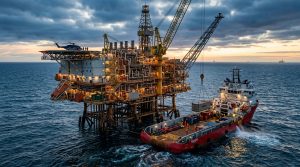
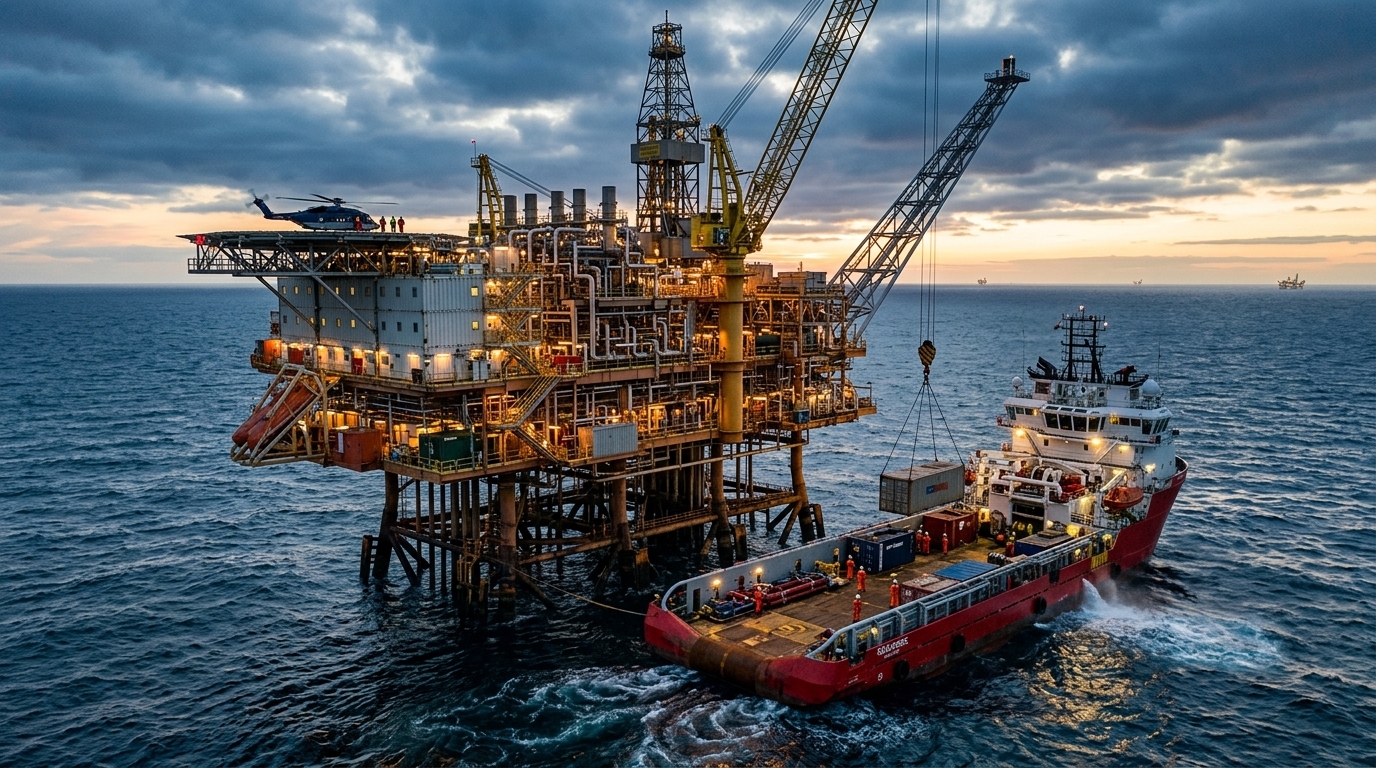
Deepwater platforms operate on tightly scheduled vessel runs. Anchor Handling Tug Supply (AHTS) vessels reposition rigs and manage moorings, while PSVs keep operations stocked with everything from drilling mud to spare parts. Deep water’s demand for well-equipped, specialized vessels is why the segment is projected to lead the offshore support vessel market, contributing over 40% of it globally in 2026. A single missed supply run can idle a multimillion-dollar rig for days, which is why logistics reliability sits at the center of deep water planning.
2. Skilled Workforce and Crew Management
Deepwater projects draw on a small, highly specialized global talent pool, including subsea engineers, ROV pilots, and drilling superintendents, who rotate on and off installations via helicopter or crew vessel. Managing that workforce across borders means handling visas, work permits, payroll compliance, and rotation scheduling without disrupting the project timeline. This is where Employer of Record and immigration support functions plug directly into operational continuity.
3. Regulatory Compliance and Permitting
Deepwater developments cross multiple layers of environmental, safety, and local-content regulation, often spanning several countries when contractors, vessels, and crew originate from different jurisdictions. Delays in permitting or non-compliance can halt a project entirely (a risk repeatedly flagged in industry risk assessments of deepwater field development).
4. Subsea and Technical Support
Beyond a few hundred meters, human divers can’t intervene: subsea work depends on Remotely Operated Vehicles (ROVs), well intervention systems, and construction support vessels. This technical layer of offshore support is what allows operators to install, inspect, and repair subsea infrastructure without ever putting a diver at that depth.
5. Risk Mitigation and Cost Control
Deepwater capital expenditure is enormous, and cost overruns are common when logistics or compliance failures cascade into delays. As one industry analysis on deep water project risk notes, technically complex deep water projects that require large capital expenditure over long periods demand close cost monitoring, financial risk assessment, and mitigation plans implemented as early as possible in the project. Strong offshore support infrastructure is, in effect, a risk management tool, it’s what keeps small disruptions from becoming expensive ones.
Key Offshore Support Services That Drive Deepwater Success
When people talk about the role of offshore support in oil and gas, they’re usually referring to a specific bundle of services working together:
- Manpower supply and talent management — sourcing and deploying qualified offshore personnel
- Employer of Record (EOR) services — enabling compliant employment without operators needing a local legal entity
- Immigration and work-permit facilitation — keeping international crews mobile and compliant
- Global payroll and tax compliance — managing multi-country payroll accurately and on time
- Offshore logistics and vessel coordination — ensuring supply chains stay uninterrupted
- HSE (Health, Safety, and Environment) and controls management — maintaining safety standards across operations
Each of these functions reduces a different point of failure. Together, they form the operational scaffolding that allows exploration and production teams to focus on the technical work of finding and producing hydrocarbons.
Challenges Deepwater Operators Face Without Strong Offshore Support
Operators that under-invest in offshore support tend to run into predictable problems: supply delays that idle expensive rig time, compliance gaps that trigger fines or work stoppages, and workforce shortages that stall critical operations. Industry commentary on deepwater development consistently points to logistics, contracting, and skilled-personnel shortages as recurring obstacles for both operators and oilfield service firms working in this space. These challenges become far more manageable with an experienced support partner already embedded in the region.
This is also why the offshore support sector itself continues to expand. Market research shows the oil and gas sector secured a 73.4% share of the offshore support vessel market in 2024, underscoring just how central this support infrastructure remains to the industry, even amid the rise of offshore wind and other adjacent sectors.
The Future of Offshore Support in Oil and Gas
As exploration moves into ultra-deepwater and more geographically complex regions, such as West Africa, Brazil’s pre-salt basins, and the Gulf of Mexico, the demands placed on offshore support providers are only intensifying. Operators increasingly need partners who can operate across multiple countries at once, coordinate compliance across differing legal systems, and scale workforce deployment up or down as projects move through exploration, development, and production phases. The role of offshore support in oil and gas is shifting from a purely operational function to a strategic partnership that directly affects project economics.
Conclusion: Partnering for Offshore Support Success
Deepwater success is rarely decided by drilling technology alone. It is decided by whether the surrounding support ecosystem (supply logistics, workforce management, regulatory compliance, and subsea capability) holds up under pressure. The role of offshore support in oil and gas is, in that sense, foundational: it’s the difference between a project that runs on schedule and one that bleeds time and capital to preventable disruptions.
For operators evaluating how to structure that support, the questions worth asking are straightforward: Does your support partner operate where your project is? Can they scale workforce and logistics as the project moves from exploration into production? And do they have the compliance infrastructure to handle multi-jurisdiction operations without adding risk to your timeline? Getting those answers right early is what separates a support partner from a support liability.
Find more insightful blogs here.
Follow us on Facebook, YouTube, LinkedIn, and X for more updates.