Yoho Platform Restart: The Key Facts
Seplat Energy’s Yoho production platform returned to operation in the third quarter of 2026 after an extended shutdown following a fire on 27 September 2025. Seplat had initially expected the asset to return to production in the second quarter of 2026, but its July 2026 investor presentation moved the expected return to the third quarter as repair and integrity work progressed.
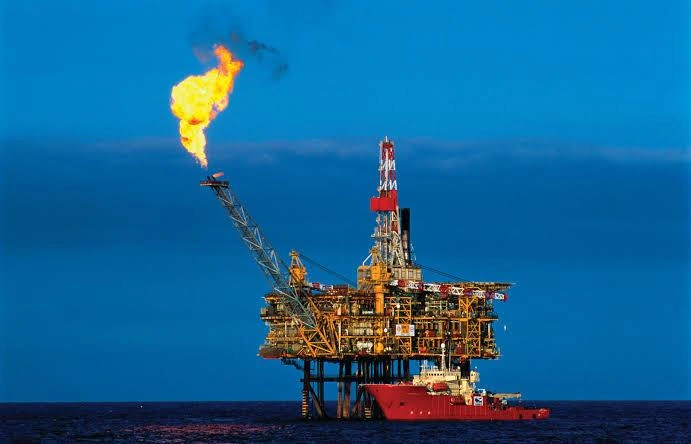
The restart is significant because the Yoho production platform is part of OML 104, located offshore south of Akwa Ibom State. The block contains the Yoho and Awawa producing fields, while crude is exported through the separate Yoho Floating Storage and Offloading (FSO) facility.
Before the incident, Yoho was producing approximately 10,000 barrels per day on a net working-interest basis, according to Seplat. The company said the fire damaged electrical systems and adjoining piping but that the platform’s safety systems operated effectively and no injuries were recorded.
The significance of the restart goes beyond the return of production.
It also raises an important question for companies operating across Nigeria’s offshore oil and gas value chain:
What happens to the workforce required to support increased offshore activity?
The answer involves far more than hiring engineers. It extends to maintenance, marine operations, logistics, HSE, recruitment, immigration, payroll, and workforce management.
What Happened to the Yoho Platform?
The Yoho production platform experienced a fire on 27 September 2025. According to Seplat, the platform’s safety systems responded effectively; there were no injuries, and the facility was subsequently taken offline for repairs. The company identified damage to electrical systems and adjoining piping that needed to be addressed before production could safely resume.
The shutdown affected offshore production. Seplat reported that the Yoho outage contributed to lower fourth-quarter 2025 volumes and stated that the facility had been producing at approximately 10,000 barrels per day on a net working-interest basis before the incident.
It is important, however, to distinguish the Yoho production platform from the Yoho FSO.
The production platform supports offshore production operations, while the FSO is used to export crude from OML 104. Seplat explicitly identifies the two as separate facilities.
It is important to distinguish the production platform from the Yoho FSO. The two are connected operationally but are different facilities. The Yoho FSO is used to export crude from OML 104, while the production platform is where production operations take place.
When Did the Yoho Platform Restart?
Seplat’s earlier guidance had pointed to a second-quarter 2026 return to production. Its first-quarter 2026 results said the restart remained on track for Q2.
By July 2026, however, Seplat’s investor materials indicated that the company was targeting the third quarter of 2026 for the return of Yoho to production.
Recent September 2026 reporting indicates that the facility subsequently returned to operation during Q3 2026, restoring offshore production capacity after the prolonged shutdown.
This timeline is important because it shows that restarting a major offshore asset is not simply a matter of switching equipment back on. Repair, integrity assurance, commissioning and operational readiness can all affect the return date
Why the Yoho Platform Restart Matters to Nigeria
The Nigerian Upstream Petroleum Regulatory Commission reported that Nigeria produced an average of 1,677,777 barrels of crude oil and condensate per day in August 2026, up 0.4% from July. Crude oil alone averaged 1,500,190 barrels per day, with Nigeria meeting its OPEC quota for the fourth consecutive month.
The Yoho restart should be viewed as one part of this broader production picture rather than as the sole reason for national output changes.
The August production figures also predate the Q3 restart, meaning the full effect of the Yoho return would be reflected in later production data rather than in the August figures themselves.
That distinction is important.
Nigeria’s production growth depends on more than bringing one platform back online. It requires a functioning ecosystem that includes:
- Reliable production facilities
- Well integrity
- Processing infrastructure
- Export systems
- Maintenance
- Engineering support
- Offshore logistics
- Skilled technical personnel
- Safety management
- Regulatory compliance
- Workforce planning
The oil does not simply move from a reservoir to a tanker by itself.
There is an entire operational ecosystem behind every barrel.
The Yoho Restart and Nigeria’s Wider Offshore Activity
The return of Yoho comes against a broader backdrop of offshore investment and production recovery in Nigeria.
Seplat reported that its offshore idle-well restoration programme delivered significant additional production capacity in 2025. The company restored 49 idle wells, adding approximately 48.6 thousand barrels per day of gross production capacity, and said a further phase of the programme was planned for 2026.
Seplat’s wider offshore programme also includes new drilling and asset-integrity work. Its 2026 plans included the return of Yoho to production, further idle-well interventions and new offshore drilling activity.
The broader message is clear: operators are looking not only at new developments but also at restoring existing capacity, improving asset reliability and getting more value from infrastructure already in place.
The Yoho restart therefore sits within a much larger operational trend.
What Does This Mean for Offshore Operations?
When an offshore production facility returns to service, the work does not end on the day production resumes.
In many cases, the restart marks the beginning of another demanding operational phase.
1. Engineering and Maintenance Teams
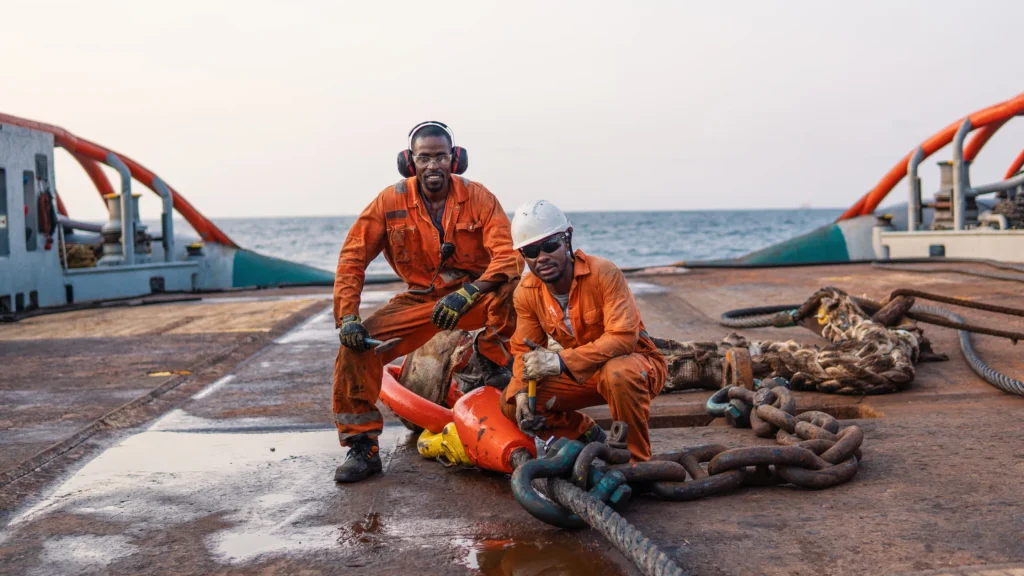
Electrical, mechanical, instrumentation, inspection and maintenance specialists are essential to maintaining offshore facilities.
After an extended shutdown and major repair programme, ongoing inspections, reliability monitoring and preventative maintenance can be especially important.
2. Offshore Technical Personnel
Production engineers, process technicians, field operators, HSE professionals, marine personnel and other technical specialists support day-to-day offshore operations.
The exact workforce requirements will depend on the asset, operating model and stage of activity.
3. Logistics and Marine Support
Offshore operations require the coordinated movement of people, equipment, materials and supplies.
Crew transfers, vessel support, equipment mobilisation, marine services and offshore logistics all have to work together to keep operations moving.
4. HSE and Compliance Personnel
Offshore production operates in an environment where safety and compliance cannot be treated as paperwork exercises.
Personnel must understand site procedures, regulatory requirements, emergency response protocols and operational risks.
5. Workforce Management
As offshore activity increases, operators and contractors also have to manage recruitment, mobilisation, contracts, payroll, documentation and employee administration.
That makes workforce planning an operational issue, not simply an HR issue.
Is the Yoho Restart Already Creating Workforce Demand?
The restart does not automatically mean that every offshore occupation will experience a hiring surge.
However, recent recruitment activity provides an indication of the kinds of specialist roles needed around Yoho operations.
For example, a September 2026 recruitment listing for a Field Operator I identified the Yoho Platform in Akwa Ibom as the work location and described responsibilities involving equipment and wells, routine maintenance, production monitoring and safety procedures.
A separate August 2026 recruitment listing also advertised a Marine Advisor I – Yoho Platform role involving marine terminal operations, tanker turnaround and oversight of marine-related contractors.
These individual vacancies should not be interpreted as proof of a sector-wide hiring boom.
They do, however, illustrate an important point: offshore production requires a broad range of people beyond the core production team.
Which Offshore Roles Could See More Demand?
As production and project activity develop, workforce requirements can arise across several parts of the offshore value chain.
Potential areas include:
- Offshore engineers
- Field operators
- Production specialists
- Mechanical technicians
- Electrical technicians
- Instrumentation specialists
- HSE professionals
- Marine personnel
- Project managers
- Maintenance specialists
- Inspection personnel
- Logistics professionals
- Procurement specialists
- Administrative and HR professionals
- Offshore support crews
The important point is not that every one of these roles will automatically experience increased hiring.
Rather, renewed operational activity can create workforce requirements across operators, contractors, service companies, and supporting businesses.
The oil and gas industry does not only need people who can work on a platform.
It also needs people who can support everything around the platform.
The Workforce Challenge: Finding Talent Fast Enough
Here is where offshore companies can encounter a practical problem.
A project may be ready.
The equipment may be ready.
The budget may be approved.
The vessel may be available.
And then someone asks:
“Where are the qualified people?”
Suddenly, the project meeting becomes a recruitment meeting.
The challenge is especially relevant for specialised offshore positions because hiring cannot always follow a standard recruitment process.
Companies may need professionals with:
- Specific technical certifications
- Offshore experience
- Industry knowledge
- Safety credentials
- Project-specific experience
- Local regulatory knowledge
- International mobility
- Short mobilisation timelines
Recent Yoho-related vacancies demonstrate that operational and marine roles can require a combination of technical experience, safety knowledge and offshore-specific capability.
That makes specialist recruitment an important part of offshore project planning.
Kharis Petroleum Resources & Investments provides staffing and recruitment services covering talent acquisition, contract and permanent staffing, candidate screening and executive search.
Why Flexible Staffing Can Matter
Offshore projects do not always require permanent employees.
Some requirements may last several weeks.
Others may last several months.
Some specialists may only be needed during a particular phase of a project.
That is why flexible staffing models can be useful.
Contract staffing can help companies bring in specialised personnel for defined projects without creating unnecessary long-term workforce commitments.
Permanent recruitment, on the other hand, can support organisations that are building long-term operational capability.
The right model depends on the role, project duration, skills required and wider workforce strategy.
The Yoho restart illustrates why this matters. A production asset can move through several stages, including repair, commissioning, maintenance, production optimisation, and ongoing operations, and each stage may require a different mix of expertise.
Immigration Can Become Part of the Offshore Workforce Equation
Offshore projects may also require international specialists.
A company operating in Nigeria could need technical personnel from another country for engineering, commissioning, inspection, project management or specialised maintenance.
That introduces another layer of workforce planning.
Foreign employees may require appropriate visas, work permits and immigration documentation before they can legally work in Nigeria.
For international operators and contractors, immigration planning should therefore be integrated into workforce planning rather than treated as an administrative task at the end of the process.
Because discovering that your specialist cannot legally mobilise two days before deployment is not exactly the definition of operational efficiency.
Kharis provides immigration support services covering visa and work-permit requirements for international employees and their dependants.
Payroll and Compliance Cannot Be an Afterthought
More offshore activity can also mean more employees, contractors and workforce transactions to manage.
That creates additional payroll and compliance responsibilities.
Companies may need to manage:
- Salary processing
- Statutory deductions
- Tax obligations
- Employee records
- Benefits administration
- Contract management
- Workforce reporting
- Local employment requirements
For multinational businesses, the challenge can become even more complex when employees, contractors or specialists are working across different jurisdictions.
Payroll errors may look small on a spreadsheet.
They rarely feel small to the person whose salary is wrong.
A reliable payroll structure is therefore an operational requirement, particularly when organisations are mobilising workers quickly for projects.
Kharis provides global payroll management services designed to support accurate, timely and compliant payroll processing across multiple markets.
What Offshore Companies Should Prepare For
The Yoho platform restart provides a useful lesson for companies operating across Nigeria’s offshore oil and gas value chain.
Production recovery should be matched by workforce readiness.
Companies preparing for increased offshore activity should consider five areas.
1. Build a Talent Pipeline
Do not wait until a project starts before looking for specialized personnel.
Identify critical positions early and maintain access to qualified candidates.
2. Plan Workforce Mobilization
Recruitment is only ONE PART of deployment.
Companies may also need to coordinate documentation, onboarding, certifications, medical requirements, travel, accommodation, offshore rotations, and mobilisation schedules.
3. Integrate Compliance Early
Employment, tax, immigration, and regulatory requirements should be built into workforce planning from the beginning.
4. Use Flexible Workforce Models
Not every role requires a permanent employee.
Contract and project-based staffing can provide flexibility when operational requirements change.
5. Work With Local Expertise
International companies entering or expanding in Nigeria can benefit from partners that understand the country’s employment, workforce, and operational environment.
Yoho Is Part of a Bigger Offshore Story
The Yoho platform restart should not be viewed in isolation.
Nigeria’s upstream sector is also seeing a broader push to restore production capacity, develop new offshore projects, and attract investment.
In August 2026, NUPRC said 22 major offshore projects were expected between 2026 and 2030, with estimated investment potential of $30 billion to $50 billion. The Commission said the projects were expected to increase production, create jobs and strengthen energy security.
NUPRC has also highlighted the need to develop domestic capabilities across areas including marine logistics, subsea engineering, fabrication, maintenance, inspection and certification.
That means the opportunity extends beyond oil producers themselves.
Contractors, service companies, engineering firms, marine operators, logistics providers, recruitment companies and workforce-management specialists can all form part of the supporting ecosystem.
The Real Opportunity Is Beyond the Barrel
Oil production figures are important.
But behind every production number is a network of people, systems, equipment and services.
The Yoho platform restart demonstrates this clearly.
A production facility can return to operation only when engineering, maintenance, safety, logistics, people and infrastructure come together.
And as Nigeria continues working to increase upstream production, workforce readiness becomes increasingly important.
For operators and contractors, the question should therefore not only be:
“How many barrels can we produce?”
It should also be:
“Do we have the people, systems and support required to produce them safely, efficiently and compliantly?”
That is where strategic workforce management becomes critical.
How Kharis Can Support Offshore Workforce Requirements
At Kharis Petroleum Resources & Investments, we support organisations operating across Nigeria and other markets with:
- Recruitment and staffing
- Employer of Record services
- Payroll management
- Immigration support
- Offshore support solutions
For companies preparing for new projects, restarting operations or expanding their Nigerian footprint, having the right workforce strategy in place can make mobilisation more efficient and reduce avoidable delays.
Because when production moves, people have to move with it.
And preferably, they should be the right people.
Conclusion
The Yoho platform restart is an important development within Nigeria’s broader effort to restore production capacity and strengthen offshore operations.
But sustainable production growth requires more than restarting infrastructure.
It requires reliable assets, skilled professionals, effective workforce planning, strong safety systems, regulatory compliance and capable service partners.
For companies operating in Nigeria’s oil and gas industry, continued offshore activity may create new opportunities—but it can also create new workforce requirements.
The companies that prepare their people and operational systems before the next project begins will be better equipped to respond when those requirements emerge.
Because in offshore operations, waiting until the last minute is rarely a strategy.
Usually, it is just an expensive way of discovering that someone forgot to hire the specialist.
Need recruitment? Workforce management? Or offshore support for your Nigeria operations?
Kharis Petroleum Resources & Investments can help you build and manage the workforce behind your operations.