The future of renewable energy in Nigeria is no longer a climate conversation; it is an economic survival strategy. For decades, the nation’s energy narrative revolved almost entirely around crude oil exports and centralized, gas-fired grid generation. Meanwhile, manufacturing plants, hospitals, telecommunication hubs, residential estates, and small-to-medium enterprises (SMEs) were forced to build a parallel, self-funded “generator economy” to insulate themselves from chronic national grid instability. Moving deeper into 2026, that legacy fossil-dependent model is completely collapsing under the weight of soaring diesel costs, extreme foreign exchange (FX) volatility, and structural grid distribution constraints.
Today, a powerful convergence of declining global solar asset costs, aggressive state-level embedded generation policies, private-sector capital mobilization, and systemic grid deficits has fundamentally shifted the energy paradigm. Nigeria is transitioning toward decentralized, solar-led industrialization—not as a progressive luxury, but as an absolute corporate necessity. As macroeconomic realities shift across Sub-Saharan Africa, underscored by moments where OPEC cuts oil demand forecast due to the Hormuz shock, the urgency to diversify domestic power sources has intensified, positioning clean energy as the bedrock of future industrial output.
1. Why the Future of Renewable Energy in Nigeria Cannot Be Ignored
The momentum defining the future of renewable energy in Nigeria is backed by an unshakeable set of structural realities that cannot be bypassed by policymakers or corporate executives:
- Supply-Demand Disconnect: Nigeria’s operational grid capacity frequently fluctuates between a mere 3,500 MW and 4,500 MW, serving a population exceeding 220 million people. The unserved and underserved demand remains astronomically high.
- The Energy Access Gap: Over 80 million citizens remain completely disconnected from the national transmission network, making Nigeria one of the largest unserved energy markets globally.
- The Diesel Burden: Nigerian businesses spend billions of dollars annually to fuel, service, and maintain industrial diesel generators, draining corporate liquidity and driving up production costs.
This structural imbalance creates a massive, highly profitable commercial opening for alternative energy deployment, cementing the future of renewable energy in Nigeria as a highly viable frontier for international infrastructure funds.
The Levelized Cost of Energy (LCOE) Equation
In 2026, self-generation using diesel fuel often exceeds $0.35 to $0.50 per kilowatt-hour (kWh) for commercial users, heavily exposed to local currency devaluation and supply-chain logistics bottlenecks. Conversely, decentralized solar-plus-storage arrays are delivering highly competitive long-term pricing profiles. To evaluate the true viability of these investments, project financiers rely on the Levelized Cost of Energy (LCOE) formula:
LCOE=∑t=1n(1+r)tEt∑t=1n(1+r)tIt+Mt+Ft
Where:
- It = Initial capital investment expenditures in year t
- Mt = Operational and maintenance expenditures in year t
- Ft = Fuel costs (which drop to exactly 0 for solar, wind, and hydro assets)
- Et = Total electrical energy output generated in year t
- r = The discount rate or corporate cost of capital
As international development finance institutions (DFIs) roll out targeted blended finance instruments and specialized infrastructure funds to de-risk localized developers, the cost of capital (r) is steadily declining. This systematic drop in capital costs ensures that solar LCOE continues to trend downward, making clean energy assets economically superior to traditional diesel backup configurations.
2. Mapping Nigeria’s Key Renewable Growth Segments
When analyzing the future of renewable energy in Nigeria, it becomes clear that the transition is not uniform; rather, it is highly specialized and sector-driven based on localized commercial requirements.
A. Commercial & Industrial (C&I) Solar — The Real Engine
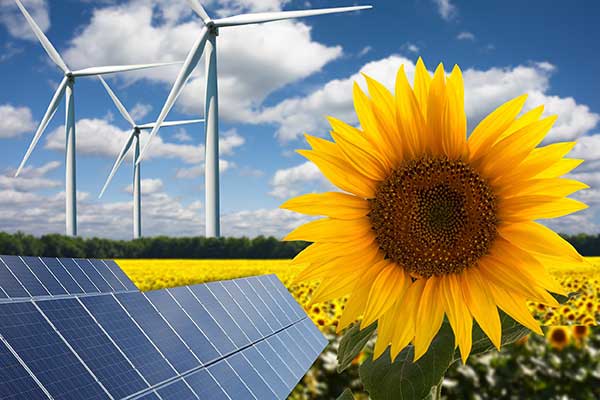
The strongest, most immediate commercial opportunity lies in decentralized solar solutions tailored for the Commercial & Industrial (C&I) sector. Large-scale manufacturing plants, commercial banks, offshore oil and gas service yards, telecom transceiver stations, large residential estates, and newly constructed data centers are actively deploying rooftop and ground-mounted solar arrays paired with advanced Battery Energy Storage Systems (BESS).
[Traditional Corporate Energy Model] ──► Fragile National Grid + Expensive Diesel Base
                                                    │
                                                    ▼
[Modern 2026 Microgrid Architecture] ──► Solar PV Base + BESS Storage + Gas/Diesel Backup
By transitioning to these hybrid configurations, corporations are effectively hedging against grid failure and fuel price spikes. This is not philanthropic or charity-driven electrification; it is a hard-nosed, profit-maximizing strategy designed to stabilize operational expenditures.
B. Mini-Grids & Rural Electrification Frameworks
Nigeria’s rural electrification market represents one of the largest unserved arenas in Sub-Saharan Africa. Supported by initiatives from the Rural Electrification Agency (REA), private developers are constructing decentralized solar mini-grids to power agricultural processing hubs, rural trading markets, health centers, and cottage industries. This distributed approach completely bypasses legacy transmission bottlenecks and reduces standard line losses.
C. Utility Hydropower Baseloads
Hydropower remains a critical baseload component within Nigeria’s broader energy mix. Large installations like the Kainji Dam and Shiroro Dam continue to inject stable power into the national grid framework. However, climate-induced rainfall variability, heavy siltation, and legacy infrastructure constraints limit rapid, short-term scaling. Consequently, while utility hydro will remain vital, it will not be the primary driver of rapid industrial energy growth.
D. Geographically Selective Wind Potential
Wind power deployment is highly restricted by geography but holds substantial promise within northern atmospheric corridors. The Katsina Wind Farm serves as Nigeria’s flagship asset in this segment. Continued scaling depends heavily on localized grid modernization and the willingness of private capital to navigate regional security and logistics frameworks.
3. The Future of Renewable Energy in Nigeria: A Decentralized Reality
Unlike western energy markets that achieved economic scale through massive, centralized, state-funded national transmission lines, the domestic trajectory of the future of renewable energy in Nigeria is explicitly local, decentralized, and distributed. Driven by the landmark Electricity Act, which demonopolized electricity generation and transmission, individual states are now establishing independent regulatory frameworks to attract private developers.
The most realistic model dominating the 2026–2035 horizon includes:
- Embedded Generation: Localized power plants directly connected to regional distribution networks, bypassing the fragile national grid.
- Corporate Power Purchase Agreements (PPAs): Direct, long-term energy off-take contracts signed between private industrial buyers and independent power producers (IPPs).
- Energy-as-a-Service (EaaS): Zero-down-payment subscription models where commercial users pay strictly for metered clean electricity, while developers absorb the upfront asset CAPEX.
While natural gas will remain a crucial transition fuel for heavy machinery, automated solar-plus-storage platforms will increasingly dominate corporate peak shaving and baseline self-generation strategies.
4. Oil & Gas Integration: Hybrid Energy Ecosystems
An essential characteristic of the future of renewable energy in Nigeria is that it does not replace the traditional hydrocarbon footprint overnight; instead, it hybridizes it. Downstream retail fuel operators are leading this trend, systematically solarizing their forecourts to optimize their profit margins, mirroring the strategies seen in the intense regional Star Oil vs GOIL fuel rivalry in neighboring West African markets.
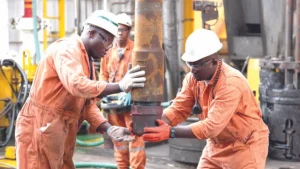
Furthermore, as the Nigerian National Petroleum Company Limited (NNPC) actively repositions for cleaner operations, upstream production platforms, onshore logistics centers, and modular refineries are incorporating solar arrays to reduce their Scope 1 and Scope 2 emissions profiles. Even as historic refining assets adapt to regional realities—such as when the TOR turns to West African crude to secure localized fuel security—processing facilities are embedding clean tech to optimize internal energy usage.
5. Workforce Deployment and The Future of Renewable Energy in Nigeria
Successfully executing utility and commercial-scale renewable projects requires significant coordination of engineering expertise and cross-border Engineering, Procurement, and Construction (EPC) teams. This structural deployment highlights why knowing how to stay compliant with immigration laws in Nigeria is vital for international energy developers.
[Foreign Technical Team Mobilization]
                  │
                  ▼
   [Expatriate Quota Verified?]
       │                  │
       ├─► NO ────────────┼─► [Project Delayed + Heavy Systemic Fines]
       │                  │
       └─► YES ───────────┴─► [STR Visa Regularized via EAS Portal]
                                    │
                                    ▼
                        Compliant Onsite Engineering
Foreign engineering managers must strictly navigate the automated Expatriate Administration System (EAS) and align with local content regulations to prevent costly visa friction.
Furthermore, if an organization expands its footprints across multiple West African borders, managing these teams can uncover severe payroll and tax compliance challenges in Africa. Developers must understand what to look for in an Ivory Coast EOR provider or how a local EOR can sponsor work permits in Ivory Coast when moving engineering leads between Anglophone and Francophone project sites.
Adhering to the specific labor laws in Ivory Coast every foreign employer should know is essential to avoiding structural delays. This proactive attention to employment compliance forms the foundation of the importance of employee retention strategies, keeping highly sought-after renewable installation engineers securely within your enterprise.
6. Key Challenges Confronting the Nigerian Clean Energy Transition
Despite its immense economic potential, several systemic bottlenecks must be proactively managed to secure the future of renewable energy in Nigeria:
- Grid Absorption Constraints: The existing transmission architecture requires immediate modernization, including smart-grid controls and utility-scale BESS installations, to safely absorb large, variable injections of clean power.
- FX Volatility & Import Exposure: Because solar PV modules, high-tier inverters, and lithium-iron-phosphate batteries are largely imported, project deployment costs remain highly exposed to foreign exchange fluctuations.
- The SME Financing Gap: While tier-one corporations can easily access commercial capital, smaller businesses struggle to secure long-term, low-interest local currency loans to fund solar conversions.
- Policy Continuity: Long-term institutional capital requires predictable regulatory signals from the Nigerian Electricity Regulatory Commission (NERC) to commit multi-billion-dollar investments confidently.
7. Where the Immediate Opportunity Lies
If project developers and global financiers ask whether the immediate, high-yield opportunity lies within centralized utility baseloads or localized commercial solar networks, the 2026 data points to a definitive answer: Localized Commercial & Industrial (C&I) Solar Systems.
This segment dominates because it offers immediate, unserved market demand, faster project execution cycles, creditworthy private-sector offtakers, and a direct, measurable reduction in daily corporate diesel expenses. While utility-scale solar farms will continue to grow over the next decade, decentralized C&I microgrids remain the primary engine driving the future of renewable energy in Nigeria forward over the 2026–2030 horizon.
8. Strategic Management and Communication Workflows
Maintaining corporate alignment during complex, multi-site solar deployments requires an agile internal communications structure that connects field installation teams directly with executive leadership.
As emphasized within our operational weekly activity report for management, our project delivery teams actively utilize advanced automation platforms like Brevo to maintain seamless communication lines across our regional execution networks.
By utilizing automated digital reporting pipelines, we ensure that technical installation metrics, local regulatory changes, safety data, and supply-chain timelines are communicated in real time, eliminating operational blind spots across our regional energy assets.
9. Conclusion: Why The Future of Renewable Energy in Nigeria Is Locked In
The transformation defining the future of renewable energy in Nigeria is decentralized, commercially incentivized, and economically irreversible. The country is moving away from an unstable, generator-dependent corporate model toward a resilient, solar-integrated industrial architecture. This monumental shift is not driven by environmental ideology; it is a cold, hard financial calculation.
Businesses that embrace decentralized clean energy models early will achieve long-term cost stability, operational resilience, and powerful ESG market positionings. Investors who structure blended finance models intelligently will successfully capture one of the largest infrastructure growth markets in West Africa.
Contact Kharis Petroleum today to find out how our expert engineering logistics, high-spec procurement channels, and specialized multi-country manpower solutions can de-risk your energy assets and power your 2026 deployment strategy.
The future of renewable energy in Nigeria is no longer a climate conversation, it is an economic survival strategy.
For decades, Nigeria’s energy narrative revolved around oil exports and gas-fired generation. Meanwhile, businesses, hospitals, telecom towers, estates, and SMEs built a parallel “generator economy” to compensate for grid instability. In 2026, that model is collapsing under rising diesel costs, FX volatility, and infrastructure constraints.
Today, a powerful convergence of declining solar costs, embedded generation policies, private-sector investment, and chronic grid deficits has shifted the paradigm. Nigeria is transitioning toward decentralized, solar-led industrialization — not as a luxury, but as a necessity.
1. Why the Future of Renewable Energy in Nigeria Cannot Be Ignored
Nigeria faces three structural realities:
- Electricity demand far exceeds available supply
- Over 80 million citizens lack reliable access
- Businesses spend billions annually on diesel self-generation
This imbalance creates a massive commercial opening for renewable energy.
The Levelized Cost of Energy (LCOE) Equation
In Nigeria, diesel-based generation often exceeds $0.35–$0.50 per kWh for commercial users. Solar-plus-storage systems are now delivering competitive long-term pricing — especially for commercial and industrial clients.
As blended finance and infrastructure funds reduce the cost of capital, solar LCOE continues to decline, making renewables economically superior to diesel backup systems.
2. Mapping Nigeria’s Key Renewable Growth Segments
Nigeria’s renewable transition is highly specialized. The growth is not uniform, it is sector-driven.
A. Commercial & Industrial (C&I) Solar — The Fastest Opportunity
The strongest immediate opportunity lies in decentralized solar for:
- Manufacturing plants
- Banks
- Oil & gas service yards
- Telecom infrastructure
- Real estate estates
- Data centers
Companies are installing rooftop and ground-mounted solar systems with battery storage to hedge against grid failure.
This is not charity electrification. It is profit-driven energy optimization.
B. Mini-Grids & Rural Electrification
Nigeria’s rural electrification market remains one of the largest in Africa. Solar mini-grids are powering:
- Agricultural processing hubs
- Rural markets
- Health centers
- Small-scale industries
The decentralized model bypasses transmission bottlenecks and reduces line losses.
C. Hydropower Stability
Hydro remains a foundational asset in Nigeria’s grid structure.
Kainji Dam and Shiroro Dam continue to provide baseload capacity.
However, climate variability and infrastructure aging limit rapid scaling. Hydro will remain important but not transformational.
D. Wind Potential (Selective Geography)
Wind deployment is geographically limited but promising in northern corridors.
Katsina Wind Farm represents Nigeria’s flagship wind asset. Expansion depends on transmission upgrades and private financing appetite.
3. Nigeria’s Energy Transition Model: Decentralized, Not Centralized
Unlike some African markets pursuing mega-grid exports, Nigeria’s trajectory is domestic and distributed.
The most realistic 2026–2035 model includes:
- Embedded generation
- Corporate Power Purchase Agreements (PPAs)
- Energy-as-a-Service contracts
- Solarization of industrial clusters
- Hybrid gas-solar systems
Gas will remain relevant in the medium term, but solar-plus-storage will increasingly dominate peak shaving and self-generation.
4. Oil & Gas Integration: Hybrid Energy Ecosystems
Nigeria’s renewable future does not replace hydrocarbons overnight it hybridizes them.
Retail fuel operators are beginning to solarize forecourts.
Nigerian National Petroleum Company Limited is also positioning for cleaner energy integration within its broader transition narrative.
Upstream facilities, logistics bases, and modular refineries are exploring solar augmentation to reduce Scope 1 and Scope 2 emissions.
The energy mix is becoming layered, not binary.
5. Workforce Deployment & Regulatory Compliance
Scaling renewable infrastructure requires:
- Engineering expertise
- Cross-border EPC deployment
- Strict compliance with local content laws
- Structured manpower management
Foreign developers must align with Nigerian labour regulations and immigration processes. Local capacity development will determine whether Nigeria captures long-term value or merely imports technology.
Retaining domestic renewable engineering talent will be critical to sustaining growth.
6. Key Challenges Nigeria Must Solve
Despite enormous potential, systemic bottlenecks remain:
- Grid Transmission Weakness
The grid cannot absorb large variable injections without modernization. - FX & Import Dependency
Solar modules and battery systems are largely imported, exposing projects to currency volatility. - Financing Gaps
SMEs struggle to access long-term, low-cost financing for renewable systems. - Policy Consistency
Stable regulatory signals are required to attract institutional capital.
Solving these constraints will determine execution speed.
7. Where the Immediate Opportunity Lies
If the question is:
Utility baseloads or localized commercial solar networks?
In Nigeria, the answer is clear:
Localized Commercial & Industrial Solar.
Why?
- Immediate demand
- Faster project cycles
- Private sector creditworthiness
- Direct diesel displacement
Utility-scale expansion will grow, but decentralized commercial solar is the 2026–2030 engine.
Conclusion: Nigeria’s Solar Decade Has Begun
The future of renewable energy in Nigeria is decentralized, commercially driven, and economically irreversible.
Nigeria is moving from a generator-dependent economy toward a solar-integrated industrial structure. The shift is not ideological it is financial.
Businesses that transition early will gain cost stability, operational resilience, and ESG positioning advantages. Investors who structure blended finance intelligently will capture one of West Africa’s largest infrastructure growth markets.
The next decade will define whether Nigeria becomes merely a consumer of imported renewable assets or a regional leader in clean industrial power systems.