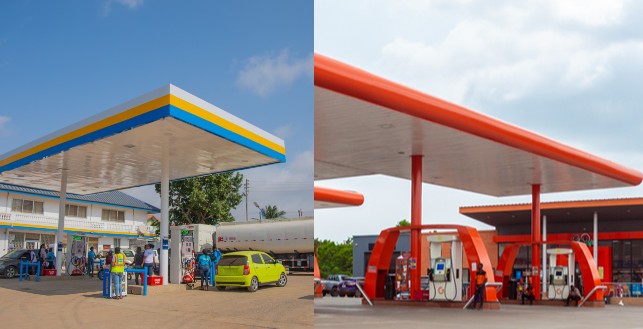
Star Oil vs GOIL has emerged as the premier corporate rivalry in the West African energy sector as of May 2026. In the first quarter of this year, the competition reached a fever pitch, with both companies jockeying for the title of Ghana’s dominant Oil Marketing Company (OMC). For the first time in decades, the state-backed titan, GOIL PLC, is facing a relentless challenge from Star Oil, a private indigenous powerhouse that has proven that agility and aggressive pricing can disrupt even the most established market leaders.
It is critical to distinguish these two entities: while they both serve the Ghanaian public, they operate under vastly different corporate architectures. GOIL PLC is a publicly listed, state-linked giant with over 400 stations, representing national stability. Conversely, Star Oil is a privately held indigenous firm that has scaled rapidly to command nearly 14% of the retail market. The battle of Star Oil vs GOIL is more than just a race for volume; it is a fundamental test of two different business philosophies in a volatile global energy market.
1. The 2026 Market Share Battle: Breaking Down the Numbers
The Battle of Star Oil vs GOIL: Corporate Strategies and Market Impacts
Understanding the Star Oil vs GOIL Landscape
Star Oil vs GOIL: A Deep Dive into Competition
The start of 2026 saw a historic shift in the Star Oil vs GOIL dynamic. In late 2025, Star Oil briefly eclipsed GOIL in the retail volume of petrol and diesel, a milestone that sent shockwaves through the National Petroleum Authority (NPA). However, by the end of Q1 2026, GOIL reclaimed its pole position, moving 256 million liters across all petroleum products.
Star Oil’s Volume Leadership
Despite GOIL’s overall lead, Star Oil remains the “volume king” in the specific categories of petrol and diesel, having moved approximately 242 million liters of these combined products in the first quarter. This suggests that while GOIL dominates the broader industrial and aviation sectors, Star Oil is winning the hearts—and tanks—of everyday motorists.
GOIL’s Resurgence
GOIL’s ability to reclaim the top spot highlights the resilience of a state-backed model. By leveraging its vast infrastructure and diverse product portfolio (including bunkering and aviation fuel), GOIL proved that its footprint is still the widest in the country. This back-and-forth illustrates how Star Oil vs GOIL keeps both companies at peak performance.
2. The March 2026 Price Wars: Winners and Losers
The Impact of Star Oil vs GOIL on Consumer Choice
In March 2026, the Star Oil vs GOIL rivalry delivered a massive win for the Ghanaian consumer. In an unprecedented pricing window, both companies aggressively cut their prices to GH¢12.28 per liter for petrol and diesel, despite rising global crude costs.
The Psychological Impact on the Industry
These “brutal cuts” acted as a market stabilizer. When the two largest players in the country drive prices down, smaller OMCs are forced to follow suit or risk total irrelevance.
- The Winners: Ghanaian drivers and transport unions (GPRTU), who saw immediate relief at the pumps.
- The Losers: Small-scale OMCs with thin margins who could not sustain such low prices, leading to a wave of industry consolidation.
This price war is a primary example of how Star Oil vs GOIL serves as an unofficial regulator of fuel prices in Ghana, often doing more for the consumer’s wallet than direct government intervention.
3. Clash of Models: Private Agility vs. State-Backed Stability
Understanding the Star Oil vs GOIL rivalry requires a look at their internal structures. GOIL operates as a PLC (Public Limited Company), meaning it must balance national interests with shareholder expectations on the Ghana Stock Exchange. Star Oil, being private, has the luxury of pivoting its strategy overnight to take advantage of market dips.
Star Oil’s Economic Contribution
Star Oil is not just a “disruptor”; it is a major economic pillar. In 2025 alone, the company paid over GH¢ 2.6 billion in taxes and levies to the Ghana Revenue Authority (GRA). This financial muscle allows them to compete on even footing with GOIL in terms of infrastructure investment.
GOIL’s Strategic Depth
GOIL’s strength lies in its “Good Energy” branding and its role in national energy security. As we noted in our recent management strategy meeting, stability is a currency of its own in the energy sector. GOIL remains the preferred partner for government contracts and massive industrial projects that require guaranteed, long-term supply chains.
4. Digital Outreach: The New Frontier of Competition
In 2026, the Star Oil vs GOIL battle moved from the streets to the digital space. Both companies have realized that data is as valuable as fuel.
Following our internal analysis, we observed that successful OMCs are increasingly using platforms like Brevo to maintain direct contact with their B2B clients. At Kharis Petroleum, we recently utilized Brevo to deploy a targeted campaign regarding our Equipment Supply and Offshore Support services, achieving a high engagement rate from procurement officers within the downstream sector.
- Star Oil has leaned into digital fleet management, providing SMEs with real-time data to track fuel consumption.
- GOIL has countered with a robust loyalty app that integrates with mobile money, targeting the tech-savvy youth demographic in urban centers like Accra and Kumasi.
5. Operational Excellence: Lessons from Nigeria and Ivory Coast
The high-pressure environment of the Star Oil vs GOIL rivalry mirrors the challenges found across West Africa. To maintain the volume these companies move, they require world-class technical talent and strict adherence to labor regulations.
Technical Manpower
Operating over 600 stations combined requires a massive, well-managed workforce. This is where Mastering Oil and Gas Contractor Management in Nigeria provides a relevant blueprint. Both Star Oil and GOIL have had to implement rigorous technical vetting for their station managers and tanker drivers to ensure safety and prevent fuel adulteration.
Regulatory Compliance
As companies expand across borders—as GOIL has frequently hinted at—they must master regional laws. For instance, Labor Laws in Ivory Coast Every Foreign Employer Should Know becomes a vital resource for any OMC looking to enter the Francophone market. Furthermore, ensuring Payroll Compliance in Ivory Coast Through EOR Services allows these giants to deploy staff rapidly in new territories without the “regulatory nightmares” of manual payroll management.
6. Infrastructure and the Future: EV and Renewable Energy
The Star Oil vs GOIL impact on Ghana’s fuel industry is now extending into the “Green Transition.”
- GOIL has utilized its state-linked status to partner on electric vehicle (EV) charging pilots, ensuring it remains relevant in a post-fossil fuel world.
- Star Oil is investing heavily in solar-ready station designs, reducing their reliance on the national grid and lowering operational costs, which further fuels their ability to win price wars.
This infrastructure push has led to an uptick in demand for specialized equipment. In our weekly activity report, we highlighted a surge in inquiries for high-efficiency fuel pumps and solar integration kits, a direct result of this arms race between the two leaders.
7. The Social Impact: Beyond the Bottom Line
When we evaluate Star Oil vs GOIL, we must also consider their social footprints.
- Star Oil has branded itself as the “Indigenous Champion,” emphasizing its status as a 100% Ghanaian-owned private firm that reinvests every cedi into the local economy.
- GOIL remains the “National Pride,” supporting sports through its sponsorship of various football clubs and contributing to public infrastructure through its social responsibility wings.
This “brand war” is just as intense as the price war. It ensures that both companies remain socially accountable, as any lapse in service or quality is immediately pounced upon by the other in the court of public opinion.
8. The NPA and Regulatory Oversight
The Star Oil vs GOIL rivalry exists within the strict boundaries set by the National Petroleum Authority (NPA). The NPA’s “Digital Tracking System” ensures that both companies play fair, preventing the dumping of illegal fuel and ensuring that the 2026 pricing windows are respected.
This regulatory framework is what prevents the rivalry from becoming destructive. Instead, it remains a healthy competition that drives efficiency, as seen in recent reports from Graphic Online regarding market relief.
9. Winning the B2B Market: A Lesson in Strategy
While retail is the most visible part of Star Oil vs GOIL, the B2B (Business-to-Business) sector is where the real profit lies. Supplying mining firms, construction companies, and the maritime industry requires a high level of logistics precision.
Our recent success with Brevo campaigns has shown that B2B clients in the energy sector prioritize:
- Supply Reliability: Can the OMC deliver in a crisis?
- Payment Flexibility: Does the company offer credit facilities?
- Technical Support: Is there an Offshore Support Service available for coastal operations?
Both companies have expanded their B2B sales teams in 2026, leading to a more professionalized and efficient fuel supply chain across all sectors of the Ghanaian economy.
Conclusion: A Thriving Industry Fueled by Rivalry
The Star Oil vs GOIL rivalry is the best thing to happen to the Ghanaian downstream sector in a generation. It has ended the era of stagnant, monopolistic service and ushered in an era of innovation, competitive pricing, and digital transparency.
By recognizing that Star Oil (the private challenger) and GOIL (the state-backed titan) are separate, independent forces, we can appreciate the unique value each brings to the table. One provides the spark of innovation, while the other provides the bedrock of stability.
Contact Kharis Petroleum today to learn how our equipment supply and talent management solutions can help you navigate this competitive landscape and scale your 2026 energy operations.