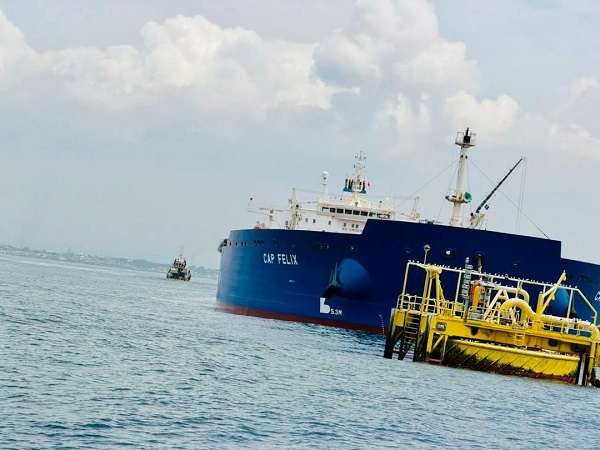
The landmark announcement that TOR receives one million barrels of Bonga crude for refining operations represents a transformative milestone for Ghana’s downstream petroleum sector in 2026. This vital development signals renewed operational momentum for the Tema Oil Refinery (TOR) and reinforces Ghana’s long-term commitment to strengthening local refining capacity, reducing dependence on imported refined petroleum products, and improving national energy security. As global energy markets face persistent supply disruptions—particularly when OPEC cuts oil demand forecast due to the Hormuz shock—the strategic choice to build up domestic refining capabilities protects the national economy from volatile price shifts.
Kharis Petroleum Resources To contextualize this downstream milestone within the broader West African energy landscape, we must analyze parallel structural transformations taking place across the region:
The future of renewable energy in Nigeria is no longer a climate conversation, it is an economic survival strategy. For decades, Nigeria’s energy narrative revolved around oil exports and gas-fired generation. Meanwhile, businesses, hospitals, telecom towers, estates, and SMEs built a parallel “generator economy” to compensate for grid instability. In 2026, that model is collapsing under rising diesel costs, FX volatility, and infrastructure constraints. Today, a powerful convergence of declining solar costs, embedded generation policies, private-sector investment, and chronic grid deficits has shifted the paradigm. Nigeria is transitioning toward decentralized, solar-led industrialization — not as a luxury, but as a necessity.
While regional commercial networks adapt to decentralized clean power models to escape expensive diesel configurations, Ghana is aggressively advancing its conventional hydrocarbon independence. The fact that TOR receives one million barrels of Bonga crude demonstrates a calculated policy shift to secure high-quality feedstock from nearby deepwater basins, ensuring the state can confidently support local industrialization.
1. What Is Bonga Crude?
Bonga crude is a premium, high-quality sweet crude oil produced from the prolific offshore Bonga oil field located in Nigeria. Operated by Shell plc through its local deepwater subsidiaries, the Bonga asset is one of the most reliable and high-yielding maritime exploration projects in West Africa. Known globally for its low sulfur content and excellent refining characteristics, it acts as an ideal feedstock for modern atmospheric distillation facilities.
When processing this specific crude grade, a configured refinery can efficiently extract high volumes of premium products, including:
- Premium Motor Spirit (PMS / Gasoline)
- Automotive Gas Oil (AGO / Diesel)
Tema Oil Refinery Aviation Turbine Kerosene (ATK / Jet A-1)
- Liquefied Petroleum Gas (LPG)
Tema Oil Refinery Low-Sulfur Fuel Oil (RFO)
For energy logistics providers seeking to evaluate the complex maritime supply chains that make these large-scale cross-border crude transfers possible, analyzing the regional infrastructure managed by Offshore Support Services in Nigeria reveals how advanced vessel fleets reliably support deepwater loading operations throughout the Gulf of Guinea.
2. The Strategic Importance of TOR Receives One Million Barrels of Bonga Crude
The industry confirmation that TOR receives one million barrels of Bonga crude goes far beyond a routine feedstock transaction. It represents a major strategic victory designed to stabilize Ghana’s primary state-owned energy infrastructure.
| Legacy Operational Bottlenecks | Modern 2026 Resumption Model |
|---|---|
| • Chronic Feedstock Deficits | • 1M Barrels Bonga Crude Delivery |
| • Idle Processing Systems | • 28,000 BPSD Operational Baseline |
| • High Finished-Product Imports | • F-61 Furnace Integration Track |
Revitalizing the Tema Oil Refinery
The Tema Oil Refinery has navigated multi-year operational hurdles, including capital constraints, prolonged equipment maintenance, and inconsistent access to raw feedstock. However, following a successful Turnaround Maintenance (TAM) program executed on its primary Crude Distillation Unit (CDU), the refinery has returned to continuous processing operations. The reality that TOR receives one million barrels of Bonga crude gives technical teams the exact volume required to stabilize processing temperatures and maximize output.
Energies Media+ 1 A sustained refining campaign supported by this delivery helps TOR achieve multiple strategic goals:
- Increasing the local supply of clean white products.
- Improving overall equipment efficiency and reducing costly idle periods.
Energies Media Proving the technical reliability of newly upgraded distillation units.
- Restoring institutional confidence among regional financial partners.
To explore how these operational expansions impact the wider domestic economy, read about The Benefits of Tema Oil Refinery to Ghana’s Oil and Gas Industry.
3. How TOR Receiving One Million Barrels of Bonga Crude Benefits Ghana
The fundamental economic advantages generated when TOR receives one million barrels of Bonga crude ripple across both macro-level financial indicators and everyday consumer spaces.
Strengthening National Energy Security
Despite being an active crude oil exporter, Ghana has historically re-imported a significant portion of its finished automotive fuels. This leaves the domestic market vulnerable to international trade shocks and port delays. When TOR receives one million barrels of Bonga crude, the country builds a reliable buffer. Local processing keeps essential transportation fuels accessible, insulating local businesses from sudden price spikes caused by international trade disruptions.
Supporting Foreign Exchange Stability
Bulk fuel imports place immense pressure on the Central Bank’s foreign exchange reserves. By refining crude oil locally, the country can dramatically reduce the volume of imported finished products. This shifts the macroeconomic balance by:
- Compressing the structural demand for US Dollars.
- Improving the national balance of trade.
- Retaining refining profit margins within the local banking ecosystem.
Managing these large-scale industrial projects across borders requires sophisticated corporate infrastructure. Global operators rely heavily on Global HR Solutions for the African Oil and Gas Industry to keep cross-border corporate deployments compliant and running smoothly.
4. Economic Impact of TOR Receiving One Million Barrels of Bonga Crude
The financial implications of this processing surge are extensive. As TOR receives one million barrels of Bonga crude, a powerful multiplier effect triggers growth across multiple supporting industries.
Crude Delivery at Tema Port Jetty │ ▼ Expanded Refinery Throughput at TOR Unit │ ┌─────────────────────────┼─────────────────────────┐ ▼ ▼ ▼ Direct Job Creation Ancillary Fleet Demand Domestic Supply Stability (Engineers & Technicians) (Tanker Haulage Brokers) (Consistent Fuel Buffers)Job Creation Across the Downstream Pipeline
Ramping up refinery throughput to process one million barrels creates numerous jobs across technical and administrative fields. These include specialized chemical engineering roles, mechanical maintenance tracks, marine transportation logistics, and site safety management.
Growth of Ancillary Industries
The commercial activity sparked when TOR receives one million barrels of Bonga crude benefits several adjacent industries:
- Bulk Haulage Transporters: Increased distribution of finished white products to national depots.
- Port and Mooring Services: Expanded utilization of Single Point Mooring (SPM) networks.
- Storage Terminal Operators: Higher inventory turnarounds across local tank farms.
5. TOR Receiving One Million Barrels of Bonga Crude and Regional Energy Trade
Ghana’s geographical positioning in West Africa gives it a natural advantage to become a major refined petroleum distribution hub under the African Continental Free Trade Area (AfCFTA).
The processing momentum established when TOR receives one million barrels of Bonga crude positions the country to reliably export high-quality, low-sulfur fuels to landlocked nations like Burkina Faso and Mali, as well as neighboring coastal economies like Togo and Côte d’Ivoire. This regional integration transforms Ghana from a raw resource exporter into a provider of high-value energy products.
To support this cross-border operational growth, modern energy firms often utilize Employer of Record Services in the Oil and Gas Sector to quickly set up compliant, localized sales and engineering teams in destination markets.
6. Challenges Facing TOR Despite Receiving One Million Barrels of Bonga Crude
While the delivery of this feedstock is highly positive, sustaining long-term commercial profitability requires addressing several underlying operational challenges.
Africa News Agency Even as TOR receives one million barrels of Bonga crude, infrastructure modernization remains a key priority. To move beyond its current operating baseline of 28,000 barrels per stream day and reach its near-term goal of 45,000 barrels, the refinery must complete the installation and tie-in of its new F-61 furnace.
Graphic Online Additionally, a single delivery of one million barrels provides an excellent operational window, but long-term success requires a continuous supply of feedstock. The refinery must establish consistent, multi-year crude supply agreements to prevent future idle periods.
7. Technical Suitably and Environmental Compliance
According to the technical standards maintained by the National Petroleum Authority (NPA) of Ghana, Bonga crude’s low-sulfur properties make it an ideal fit for TOR’s atmospheric distillation configuration. It allows the refinery to maximize premium product output while minimizing processing wear on aging processing units.
Additionally, all refining activities must stay strictly aligned with the emissions and environmental safety standards monitored by the Environmental Protection Agency (EPA) of Ghana, ensuring that local production matches international environmental guidelines.
8. Conclusion: The New Path Forward for West African Refining
In conclusion, the news that TOR receives one million barrels of Bonga crude for refining operations marks an important turning point for Ghana’s downstream petroleum sector. Effectively managing this feedstock delivery will create jobs, protect foreign exchange reserves, and strengthen national energy independence. By building strategic crude supply partnerships and prioritizing refinery modernization, Ghana is successfully paving the way toward long-term energy sustainability and economic resilience.