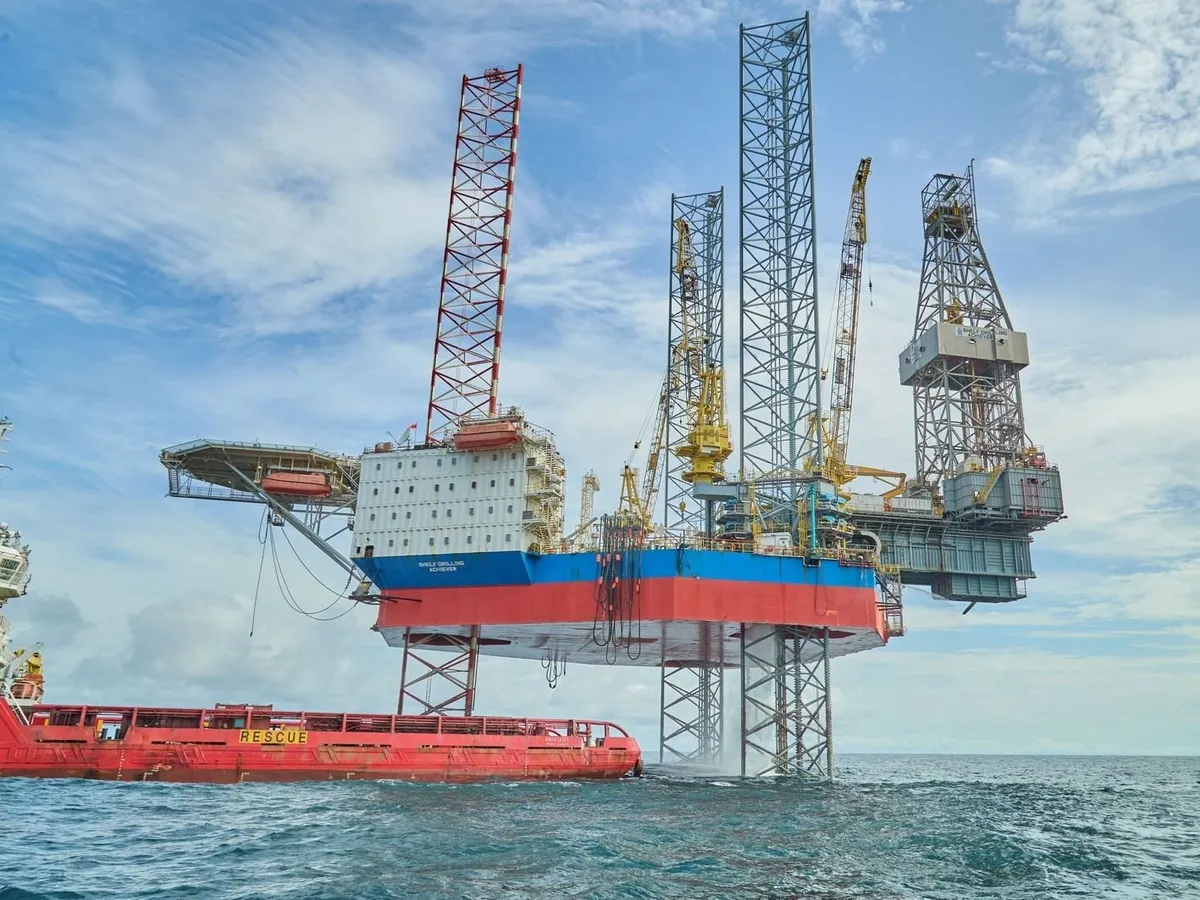
When assessing the deployment of offshore support services in Nigeria, global energy operators must evaluate both logistical and macro-economic factors. The marine engineering landscape in West Africa has expanded significantly in 2026 as major deep water exploration projects continue to move forward at scale.
This operational surge comes at a critical turning point for the global energy market. International markets continue to adjust to systemic trade shifts, particularly after OPEC cut oil demand forecasts due to the Hormuz shock. These developments forced multi-billion-dollar energy consortia to redirect capital allocations toward highly resilient offshore basins. As a result, the deepwater fields of the Gulf of Guinea have become a central focus for global energy portfolios.
However, the rapid growth of offshore operations contrasts sharply with evolving onshore energy dynamics.
The future of renewable energy in Nigeria is no longer just a climate conversation — it has become an economic survival strategy. For decades, Nigeria’s energy narrative revolved around oil exports and gas-fired generation. Meanwhile, businesses, hospitals, telecom towers, estates, and SMEs built a parallel “generator economy” to compensate for chronic grid instability.
In 2026, that model is collapsing under rising diesel costs, FX volatility, and infrastructure constraints. Today, a powerful convergence of declining solar costs, embedded generation policies, private-sector investment, and persistent grid deficits has shifted the national energy paradigm. Nigeria is now transitioning toward decentralized, solar-led industrialization — not as a luxury, but as a necessity.
This domestic transition away from diesel-powered systems frees up local refining capacity and reduces localized fuel pressures. Consequently, the specialized sector delivering offshore support services in Nigeria can dedicate its fleets, assets, and technical manpower almost exclusively toward maximizing high-yield deepwater blocks and sustaining long-term oil export capacity.
1. The Legislative Catalyst Behind Offshore Support Services in Nigeria
The regulatory framework governing maritime oil field operations has changed significantly following the comprehensive implementation of the Petroleum Industry Act (PIA). Led by the Nigerian Upstream Petroleum Regulatory Commission (NUPRC), this modernized legal structure has reduced bureaucracy, eliminated overlapping jurisdictions, and introduced multi-tier fiscal incentives designed to attract specialized maritime investment.
Legacy Regulatory Bottlenecks vs Modern Operational Structure
| Legacy Regulatory Bottlenecks | Modern 2026 Operational Framework |
| Unclear multi-agency approvals | Unified NUPRC asset governance |
| Indefinite vessel certification timelines | 90-day digital registration track |
| Opaque local compliance audits | Transparent NOGIC JQS evaluation |
Under current guidelines, companies providing offshore support services in Nigeria now benefit from a simplified 90-day fast-track system for vessel safety certifications and operational permits.
By establishing clearer legal frameworks and offering tax credits for deepwater assets, Nigeria has become a highly attractive operating environment for international energy service providers. This policy direction encourages multinational marine operators to station high-specification offshore assets locally for long-term deployment programs.
2. Fleet Optimization and Marine Logistics in Offshore Support Services in Nigeria
The successful execution of high-yield deepwater extraction programs depends heavily on the efficiency of local marine logistics networks. In response, companies managing offshore support services in Nigeria have upgraded their fleets, transitioning from basic supply vessels to advanced, technology-driven subsea support systems.
The Multi-Tier Vessel Matrix
To meet the operational demands of deepwater assets such as Bonga North, Egina, and Erha, the offshore support ecosystem deploys a specialized vessel architecture:
Platform Supply Vessels (PSVs)
Equipped with advanced Dynamic Positioning (DP2/DP3) systems to ensure safe cargo transfers near floating production systems.
Anchor Handling Tug Supply (AHTS) Vessels
Designed to tow, position, and secure multi-ton offshore drilling rigs across volatile maritime environments.
Multi-Purpose Support Vessels (MPSVs)
Configured with high-capacity subsea cranes for specialized subsea maintenance and lift operations.
Fast Crew Suppliers (FCS)
Built with fuel-efficient hull technologies to transport technical personnel quickly between coastal staging bases and offshore production zones.
This upgraded fleet architecture minimizes supply-chain delays and protects multi-billion-dollar offshore fields from costly operational downtime.
3. Technical Manpower and Specialized Crews for Deepwater Deployments
Beyond heavy marine equipment, technical human capital remains one of the most critical components of offshore support services in Nigeria.
Operating complex deepwater infrastructure requires highly skilled professionals, including:
- subsea installation engineers
- hydrographic survey specialists
- offshore safety supervisors
- ROV pilots
- marine systems technicians
To maintain an efficient offshore operational structure, international engineering firms must balance expatriate expertise with skilled local professionals trained under the guidelines of the Nigerian Content Development and Monitoring Board (NCDMB).
By combining automated local capacity development programs with targeted international recruitment strategies, operators can build resilient offshore teams capable of maintaining global safety standards during extended offshore rotations.
4. Mathematical Model for Marine Vessel Utilization and Efficiency
To evaluate the commercial performance of offshore fleets, energy analysts apply a Vessel Utilization and Efficiency Index (VUEI):
VUEI = \frac{\sum_{j=1}^{M} \left[ T_{active,j} \times \left(1-\Omega_{transit,j}\right) \right] + \Psi_{subsea}}{\Phi_{OPEX} \times \left(1+\delta_{downtime}\right)} \times \left(1-\gamma_{fuel}\right)
Where:
- M = Total number of offshore vessels deployed
- Tactive,j = Billable operational hours for vessel j
- Ωtransit,j = Non-productive transit coefficient
- Ψsubsea = Subsea integration efficiency weight
- ΦOPEX = Daily operating expenditure
- δdowntime = Downtime or weather-delay coefficient
- γfuel = Fuel optimization metric
By utilizing high-specification vessels equipped with advanced DP2 positioning systems and optimized routing systems, offshore support services in Nigeria significantly reduce non-productive transit time.
This structural optimization improves operational efficiency, increases uptime, and strengthens commercial returns across deepwater developments.
5. Sourcing Technical Talent and Cross-Border Immigration Compliance
As offshore projects move from planning phases into active field development, immigration compliance becomes a major operational priority.
Executing long-cycle offshore campaigns requires foreign subsea engineers, drilling consultants, and technical supervisors to operate legally within Nigerian territorial waters. To remain compliant, international operators must actively monitor Temporary Work Permit (TWP) and Subject to Regularization (STR) visa frameworks.
As marine operations expand across regional maritime corridors into neighboring West African markets, workforce mobility becomes even more important.
For example, when engineering partners transition operations into Francophone regions, companies must understand what to look for in an Ivory Coast EOR provider. HR managers should confirm whether a workforce partner can sponsor work permits directly under its own corporate structure while remaining fully compliant with labor regulations in Ivory Coast.
Proactively managing these compliance systems allows energy operators to eliminate complex payroll, taxation, and immigration risks across Africa’s offshore workforce ecosystem.
6. Supporting Workspace Diversity and Inclusive Growth Programs
Long-term operational stability in offshore developments depends heavily on sustainable workforce strategies and inclusive corporate cultures.
The modern offshore sector increasingly recognizes that combining international expertise with local talent development improves both operational safety and community acceptance.
A key component of this transformation involves advancing diversity across technical offshore roles. In historically male-dominated sectors, supporting the advancement of women in oil and gas is becoming a major competitive differentiator.
Companies that integrate inclusive workforce development programs alongside global technical recruitment strategies often experience:
- stronger regulatory relationships
- improved community engagement
- smoother compliance audits
- better long-term employee retention
7. Secure Communication Frameworks for Remote Marine Installations
Maintaining operational safety during offshore drilling campaigns requires secure communication systems that connect offshore assets, remote field teams, and centralized management structures in real time.
As outlined in our recent weekly activity reporting systems, compliance managers now rely on encrypted digital communication infrastructures to coordinate offshore logistics, visa tracking, operational milestones, tax compliance deadlines, and regional security alerts.
By implementing automated reporting pipelines, offshore operators eliminate compliance blind spots and improve operational visibility across regional maritime projects.
8. NCDMB Mandates and Local Content in Offshore Support Services in Nigeria
Sustainable offshore operations require strict alignment with Nigerian local content mandates.
The Nigerian Content Development and Monitoring Board (NCDMB) continues to enforce regulations requiring international operators to prioritize:
- local marine asset ownership
- domestic vessel fabrication
- local crew development
- Nigerian technical manpower participation
As a result, offshore support services in Nigeria are increasingly driven by local firms investing heavily in advanced dockyards, maritime simulation centers, and technical training infrastructure.
This local investment strategy allows operators to dry-dock and maintain offshore vessels within Nigeria instead of relying on expensive overseas shipyards.
9. Conclusion: The Strategic Value of Offshore Support Services in Nigeria
The structural transformation currently taking place across Nigeria’s offshore energy sector demonstrates that investing in specialized offshore support services in Nigeria provides the operational security required to compete successfully in Africa’s evolving energy market.
By combining the legal clarity of the Petroleum Industry Act with advanced marine assets, transparent regulatory pathways, local content integration, and highly skilled technical manpower, Nigeria has successfully strengthened its position as one of Africa’s leading deepwater hubs.
Contact Kharis Petroleum today to discover how our engineering logistics solutions, high-spec procurement channels, offshore manpower services, and regional workforce management expertise can help de-risk your projects and strengthen your 2026 offshore expansion strategy.